Home Blog Page 307

Space Quiz

0

scientia205

Space Quiz

1. What is the closest planet to the Sun?
2. What is the name of the 2nd biggest planet in our solar system?
3. What is the hottest planet in our solar system?
4. What planet is famous for its big red spot on it?
5. What planet is famous for the beautiful rings that surround it?
6. Can humans breathe normally in space as they can on Earth?
7. Is the sun a star or a planet?
8. Who was the first person to walk on the moon?
9. What planet is known as the red planet?
10. What is the name of the force holding us to the Earth?
11. Have human beings ever set foot on Mars?
12. What is the name of a place that uses telescopes and other scientific equipment to research space and astronomy?
13. What is the name of NASA’s most famous space telescope?
14. Earth is located in which galaxy?
15. What is the name of the first satellite sent into space?
16. Ganymede is a moon of which planet?
17. What is the name of Saturn’s largest moon?
18. Olympus Mons is a large volcanic mountain on which planet?
19. Does the sun orbit the Earth?
20. Is the planet Neptune bigger than Earth?

Space Quiz Answers

1. Mercury
2. Saturn
3. Venus
4. Jupiter
5. Saturn
6. No
7. A star
8. Neil Armstrong
9. Mars
10. Gravity
11. No
12. An observatory
13. Hubble Space Telescope
14. The Milky Way Galaxy
15. Sputnik
16. Jupiter
17. Titan
18. Mars
19. No
20. Yes

Best Wishes From www.scientiaeducare.com

Helping you choose a successful career….

Animal Quiz

0

scientia204

Animal Quiz

1. What food makes up nearly all (around 99%) of a Giant Panda’s diet?
2. True or false? Mice live for up to 10 years.
3. What is the name of the phobia that involves an abnormal fear of spiders?
4. What is the largest type of ‘big cat’ in the world?
5. True or false? Crocodiles have no sweat glands so they use their mouths to release heat.
6. Are butterflies insects?
7. What are female elephants called?
8. True or false? Bats are mammals.
9. Bees are found on every continent of earth except for one, which is it?
10. True or false? Cats spend an average of 13 to 14 hours a day sleeping.
11. What is the fastest land animal in the world?
12. A ‘doe’ is what kind of animal?
13. True or false? Cougar’s are herbivores.
14. Groups of lions are known as what?
15. Is a dolphin a mammal?
16. What is the largest land animal in the world?
17. True of false? Snakes have slimy skin.
18. What is the only continent on earth where Giraffes live in the wild?
19. How many pairs of wings does a bee have?
20. What type of animal is the largest primate in the world?
21. Is a shark a fish or a mammal?
22. What is the most recognizable feature of a hedgehog’s appearance?
23. True or false? Owls are far-sighted, meaning that anything within a few inches of their eyes can’t be seen properly.
24. What is the name of an adult female horse?
25. What are baby goats called?
26. What is the tallest animal in the world?
27. True or false? Rabbits are born blind.
28. What is the most recognizable physical feature of the male lion?
29. How many legs does a spider have?
30. The crocodile species is believed to have been around for how long? 2 million years or 200 million years?

Animal Quiz Answers

1. Bamboo
2. False – Captive mice live for up to 2 and a half years while wild mice only live for an average of around 4 months.
3. Arachnophobia
4. The tiger, weighing up to 300 kilograms (660 pounds).
5. True – They often sleep with their mouth open to cool down.
6. Yes
7. Cows
8. True
9. Antarctica
10. True
11. The cheetah (it can reach speeds of up to 120kph – 75mph).
12. A female deer.
13. False – They are carnivores.
14. Prides
15. Yes
16. The elephant – The largest on record weighed around 12,000 kilograms! (26,000 lb).
17. False – Snakeskin is smooth and dry.
18. Africa
19. 2
20. The Gorilla
21. A fish
22. Their spines of spiky hair.
23. True
24. A mare
25. Kids
26. The giraffe – The average height is around 5 metres (16ft) and the tallest on record stood nearly 6 metres (20 ft) tall.
27. True
28. Its mane
29. 8
30. 200 million years

Best Wishes From www.scientiaeducare.com

Helping you choose a successful career….

Human Body Quiz

0

scientia200

Human Body Quiz

1. What is the name of the biggest part of the human brain?
2. The colored part of the human eye that controls how much light passes through the pupil is called the?
3. What is the name of the substance that gives skin and hair its pigment?
4. The muscles found in the front of your thighs are known as what?
5. True or false? The two chambers at the bottom of your heart are called ventricles.
6. What substance are nails made of?
7. What is the human body’s biggest organ?
8. The innermost part of bones contains what?
9. True or false? An adult human body has over 500 bones.
10. How many lungs does the human body have?
11. Another name for your voice box is the?
12. The two holes in your nose are called?
13. Your tongue is home to special structures that allow you to experience tastes such as sour, sweet, bitter and salty, what is their name?
14. The bones that make up your spine are called what?
15. The shape of DNA is known as?
16. The flow of blood through your heart and around your body is called?
17. The bones around your chest that protect organs such as the heart are called what?
18. What is the name of the long pipe that shifts food from the back of your throat down to your stomach?
19. True or false? Your ears are important when it comes to staying balanced.
20. The outside layer of skin on the human body is called the?

Human Body Quiz Answers

1. The cerebrum
2. Iris
3. Melanin
4. Quadriceps
5. True
6. Keratin
7. The skin
8. Bone marrow
9. False (there are 206)
10. 2
11. Larynx
12. Nostrils
13. Taste buds
14. Vertebrae
15. A double helix
16. Circulation
17. Ribs
18. The esophagus
19. True
20. Epidermis

Best Wishes From www.scientiaeducare.com

Helping you choose a successful career….

NIOS-National Institute of Open Schooling Result: Declared at www.nios.ac.in.

0

scientia193

NIOS-National Institute of Open Schooling Result: Declared at www.nios.ac.in.

The National Institute of Open Schooling (NIOS) has declared the Secondary Board exam results today. The results can be viewed at the official site of the board, www.nios.ac.in.

Almost 35,000 students from Uttarakhand and Western Uttar Pradesh appeared for the NIOS class 10 and class 12 exam. This year, 104 centres were identified to conduct the examinations.

The students who appeared for the exams could check their results in the following steps:

Go to the official website of NIOS
Click on the link ‘Secondary Examination Results Declared’
Enter your roll number
Click on ‘Submit’
The results will be available online and can be downloaded for reference, too.

The National Institute of Open Schooling (NIOS) was earlier known as National Open School (NOS) and was established in November 1989 as an autonomous organisation by the Ministry of Human Resource Development (MHRD), Government of India.

In 1986, the National Policy on Education suggested strengthening of Open School System for extending open learning facilities in a phased manner at secondary level all over the country as an independent system with its own curriculum and examination leading to certification. Hence, the open school was established in 1989 for the promotion and development of secondary education in the country.

Its aim is to provide education for adult neo-literates, working men and women to reinforce their functional literacy and not to allow them to relapse into illiteracy.
National Institute of Open Schooling conducts the Secondary, i.e. Class 10 and Senior Secondary, i.e. Class 12 examinations, every year.

For more details Please! Refer the Website: Click Here

                Best Wishes From www.scientiaeducare.com

Helping you choose a successful career….

Supreme Court cancels All India Pre-Medical Test

0

scientia192

Supreme Court cancels All India Pre-Medical Test

The Supreme Court has directed the Central Board of Secondary Education (CBSE) to re-conduct All India Pre-Medical Test 2015 within four weeks.

The Supreme Court on Friday had reserved its verdict on petitions seeking re-conduct of All India Pre-Medical Test 2015 for alleged large-scale irregularities in the examination held on May 3.

During the hearing, the Bench said, “The examination stands vitiated even if one student is being benefited illegally. We are not holding CBSE guilty as such. Taking into consideration the past such incidents, CBSE ought to have been cognisant of these things. It had been happening for last two-three years,” it said.

Solicitor General Ranjit Kumar, appearing for CBSE, opposed the contentions seeking cancellation of the test, saying, “6.3 lakh students cannot be made to take the exam afresh when only 44 students have been found involved in taking benefits through unfair means.”

Earlier, the vacation Bench had asked Haryana Police to file a fresh report indicating the number of beneficiaries of the alleged irregularities in the pre-medical examination. It had also asked the police to identify as many candidates as possible who had been benefited from the alleged leak. CBSE was to declare the results of AIPMT on June 5.

“We are fully aware of all this. The bigger issue is that the sanctity of the examination is under suspicion. We want to be doubly sure that there is no alternative but to order re-conduct of the examination,” the court had said, adding that it did want to take a decision “in haste.”

“We have to be doubly sure. We do not want to be criticised for any action,” the Bench had said and asked the police to “hunt” for other beneficiaries. “We are expecting the probe to conclude,” the Bench had said, adding that this was “important” to decide the future course of action.

For more details Please! Refer the Website: Click Here

                Best Wishes From www.scientiaeducare.com

Helping you choose a successful career….

Netaji Subhas-ICAR International Fellowships in India, 2015-2016

0

scientia191

Netaji Subhas-ICAR International Fellowships in India, 2015-2016

The Indian Council of Agricultural Research (ICAR) is inviting applications for Indian candidates as well as overseas candidates for a period of three years. Number of fellowships available every year for a programme leading to Ph.D. degree under this scheme will be thirty (30). The allocation of fellowships between Indian and Overseas candidates will depend upon the availability of good candidates in the identified priority areas. The application deadline is June 30, 2015.

Study Subject(s): The NS-ICAR IFs are available to support Indian/ Overseas nationals for pursuing doctoral degree in agriculture and allied sciences, in the identified priority areas, to the
-Indian candidates for study abroad in the identified overseas Universities/Institutions having strong research and teaching capabilities -Overseas candidates for study in the best Indian AUs in the ICAR-AUs system.
Course Level: Fellowships are available for pursuing doctoral degree level at identified overseas institutions and identified Indian Agricultural Universities (AUs) from ICAR-AU system in India.
Scholarship Provider: The Indian Council of Agricultural Research (ICAR)
Scholarship can be taken at: India and Overseas

Eligibility: -Master’s degree in agriculture/allied sciences with an Overall Grade Point Average (OGPA) 6.60 out of 10.0 or 65% marks or equivalent will be the eligibility requirement for the NS-ICAR IFs.
-The fresh candidates should not be more than 35 years of age on the last date prescribed for receipt of applications. The upper age limit for in-service candidates will be 40 years on the last date for receipt of applications.
-The notification for fellowship will contain the detailed eligibility requirements.
-Netaji Subhas- ICAR IF would be available for both, fresh and in-service candidates. However, the fresh candidates should have completed their qualifying degree not more than two years before the specified date in the year of admission. The inservice candidates from India should be employed in the ICAR-AU system.
-The Council will identify and announce the priority areas of research and the list of institutions for admission, one year in advance, for availing the Netaji Subhas- ICAR IFs

Scholarship Open for International Students: India and Overseas students can apply for these fellowships.

Scholarship Description: In its continued efforts towards enhancing and sustaining the standards, quality and relevance of higher agricultural education in the country, the Indian Council of Agricultural Research (ICAR) here-in-after, referred as the Council, has instituted International Fellowships with dual purpose of (i) human resource development in cutting edge technologies, and (ii) demonstrating the strength of Indian agricultural system abroad. The objective is to develop competent human resource that are trained in the identified best laboratories in the world (for Indian candidates) and similarly expose overseas candidates to the best Indian Agricultural Universities (AUs) in the ICAR-AU system (comprising of State Agricultural Universities, Central Agricultural University Imphal, ICAR-Deemed Universities, Allahabad Agricultural Institute-DU, Central Universities having agricultural faculty) for creating a pool of scientist-envoys for enhanced future co-operation.

Number of award(s): Number of fellowships available every year for a programme leading to Ph.D. degree under this scheme will be thirty (30). The allocation of fellowships between Indian and Overseas candidates will depend upon the availability of good candidates in the identified priority areas.

Duration of award(s): –The NS-ICAR IFs are available to Indian candidates as well as overseas candidates for a period of three years. -The tenure of fellowship will not be extended in any case, in so far as the Council support is concerned.
-In case the fellow is not able to complete his/her degree during this period, he/she will use his/her own resources for completing the degree.
– In case the fellow is not able to complete even after 2 years of the prescribed duration of the programme for which fellowship was sanctioned, the Council may take necessary steps, for the recovery of the fellowship paid.

What does it cover? The fellow will be entitled to the following:
-To-and-fro, economy class air ticket for international travel, by the shortest route, from the airport, nearest to the residence/ work place of the candidate to the airport, nearest to the destination University in respect of both Indian and Overseas candidates (Air tickets to be provided by the Council).
-The overseas fellows will be entitled for economy-class-travel cost reimbursement from port of arrival in India to the destination University in India and back.
-For Indian candidates, the cost on travel from place of residence/work to the port of departure in India and from port of arrival to the destination University overseas will be met by the fellows themselves or by their sponsoring organization.
-Amount payable to the International fellowship candidates:
Ph.D.
Indian fellows going abroad: Amount not exceeding-US$ 2,000/- per month Lump-sum payments towards contingent-US $ 1,000/- per year
Overseas fellows in India: Amount not exceeding-INR 40,000/- per month Lump-sum payments towards contingent-INR 25,000/- per year
Bench fee: The institutional bench fee prescribed by the Institute/University where the admission has been sought restricted to 25% of the total amount will be reimbursed by the ICAR, while the remaining 75% has to be borne by the candidate availing International Fellowships.
-The fellowship amount for the first six months, as first installment, will be released by the Council to the fellow through government notified/ approved bank to be deposited in the bank account of the fellow on receiving his/ her acceptance for the fellowship and admission letter received from the host University.
-Thereafter, the amount of fellowship will be released to the fellow, every six months, after receiving the academic progress report from the fellow duly certified by the concerned advisor/ supervisor/ head of institution.
-The first installment to the Indian fellow will be paid in Indian Rupees only.
-The fellow will meet all other costs including medical insurance etc. from the above fellowship or from his/ her own resources.
-During the tenure of fellowship, an in-service fellow may continue to receive his/her salary, types of leave and benefits etc. from the parent organization as per rules.

Selection criteria: -The candidates will be evaluated based on parameters/weighted scale thereby taking into account the relevance of the area of study, the proposed research plan, academic records, achievements and past work experience of the candidate.
-The selection will be made on the basis of evaluation score and subsequent interview by a Selection Committee, constituted by the Council and duly empowered to judge the suitability of candidate with regard to the importance of the area of study and the proposed research plan. The Committee may also decide to conduct telephonic/teleconferencing interview for the purpose. The overseas candidates may even be interviewed by experts as identified by the Council who may be based in their home country.
-The candidate should have clear record of good conduct all-through, duly certified by the Competent Authority of the University last attended or the present employer in case of in-service candidate.
-At the time of interview, the applicants must furnish a letter of acceptance for their admission in the respective degree programme at the University.
-The in-service Indian candidates must also furnish deputation approval by their respective Director of ICAR Institutes/Vice-Chancellor of Agricultural Universities.
-Once selected, the candidates must register for the programme within one year from the date of issue of letter of fellowship award. In case of delay, the offer will get terminated automatically and no separate communication towards cancellation will be issued by the Council.

How to Apply: The mode of applying is by post or electronically.

For more details Please! Refer the Website: Click Here &

Click Here

                Best Wishes From www.scientiaeducare.com

Helping you choose a successful career….

Aditya Birla Scholarship Program For MBA Student In India

0

scientia186

Aditya Birla Scholarship Program For MBA Student In India

The Aditya Birla Scholarship Program is the Group’s way of pursuing Mr. Aditya Vikram Birla’s ideals of spawning leaders with a passion to excel. Instituted in 1999, the Aditya Birla Scholarships provide an excellent opportunity for Scholars to learn through networking with the country’s first truly global conglomerate. Scholarships are awarded to MBA students who want financial assistance in pursuing their higher studies. The scholarships are valid for the course, subject to ongoing performance. While there is no binding to join the Group after the completion of their course, scholars are welcome to work with them should they qualify to do so. The scholarship amount will be sent through a cheque.

Who can apply?

The top 20 students who are selected according to their ranking in entrance exam are invited to apply through the Dean of the respective institutes. Students who belong from the institutes given below are eligible to apply for the Scholarships:
-IIMs – Ahmedabad, Bangalore, Kolkata, Lucknow, Indore, Khozikode, Shillong
-XLRI – Jamshedpur
-IITs (B.Tech) – Mumbai, Delhi, Chennai, Kanpur, Kharagpur, Roorkee, Guwahati
-BITS (Pilani) Campuses
-LAW: National Law School of India University – Bangalore, NALSAR University of Law – Hyderabad, The WB National University of Juridical Sciences – Kolkata, National Law University – Jodhpur.

Scholarship Package:

The Aditya Birla Scholarships cover a large part of academic fees as well as the hostel fees for the IITs / BITS stream and some part of the tuition fee for the management and law streams. The scholarship amount for IIMs / XLRI students are up to Rs. 1, 75,000 per annum, for IIT / BITS (Pilani) students is Rs 65,000 per annum and for LAW students’ amount of Rs. 1, 80,000 per annum or fees at actuals, whichever is lower.

Selection Process:

The selection process of Aditya Birla scholarship program are as follows:
-160 students from the IIMs and XLRI, 160 students from the IITs and BITS (Pilani) and 80 students from law campuses will be selected on the basis of the information given in their application form.
-The students’ overall achievements spanning academic and co-curricular excellence will be considered to select him/her for the next round.
-Essays written by these students will then be reviewed by a panel to shortlist candidates for the final round.
-Shortlisted students will be invited for an interview which will determine the best 16 students each from – engineering and management and 8 from law who will be named Aditya Birla Scholars.
-The performance of the Scholars will be monitored closely for the renewal of the Scholarship every year.

Assessment criteria for Aditya Birla Scholarship Program:

The Aditya Birla Scholar will be assessed on qualitative and quantitative parameters to judge his / her excellence on the academic and leadership front. This assessment will help determine the continuation of the disbursement of the Scholarship amount and the honour of continuing as “The Aditya Birla Scholar”. Assessment of certain scholastic standards being met:
-Scholastic standards: The scholar must be in the top 25 per cent of students in his/her batch.
-Work done by the scholar during the course of the program: At least 60 per cent of the assignments must have a rating of at least 7 on a 9-point scale.
-Practical work-related experiences of the scholar: Summer project must have a rating of at least 7 on a 9-point scale.
-Participation in campus activities: Active participation in a minimum of two forums on campus.
-Learning: Scholar has to write a 350-word essay on “Being an Aditya Birla scholar: experience sharing.

The assessment will be done based on the overall performance in all areas. No single factor will be a major determinant. There is no compulsion on scholars to join the group after completing their course; scholars are welcome to work if they are qualified to do so.

How to apply:

Students who are eligible for the scholarship are required to fill in the application form and submit to the Dean.

For more details Please! Refer the Website: Click Here

                Best Wishes From www.scientiaeducare.com

Helping you choose a successful career….

Pragjyotishpur University, Guwahati, Assam

0

Pragjyotishpur University, Guwahati, Assam: A New Era in Multidisciplinary Higher Education

Introduction

Located in the cultural heart of Assam, Pragjyotishpur University is an emerging private university in Guwahati committed to providing a blend of modern education and regional ethos. With an emphasis on innovation, research, and value-based learning, the university seeks to contribute significantly to the academic, professional, and ethical development of students in Northeast India and beyond.

Let’s explore the key aspects of Pragjyotishpur University—from its establishment and affiliations to the wide range of academic offerings and facilities.


Establishment of Pragjyotishpur University

Pragjyotishpur University was established in 2021 under The Pragjyotishpur University Act, 2021, passed by the Assam Legislative Assembly. It is promoted by the Pragjyotishpur Educational Foundation, which is a not-for-profit organization aimed at advancing higher education in the region.

Despite being a relatively new institution, the university has quickly gained attention for its focus on research-driven curriculum, entrepreneurship, and cultural integration.


Affiliations and Recognition

Pragjyotishpur University is:

  • Recognized by the University Grants Commission (UGC)
  • Operating under the Private Universities of Assam Act
  • Expected to build academic collaborations with international and national institutions for student and faculty exchange programs

The university is working towards acquiring further accreditations such as NAAC and AICTE approvals for professional courses.


Courses Offered at Pragjyotishpur University

The university offers undergraduate, postgraduate, doctoral, diploma, and certificate programs across various schools:

1. School of Humanities and Social Sciences

  • BA in Sociology, Political Science, History, and Assamese
  • MA in English, Sociology, and Political Science
  • PhD in Social Sciences and Language Studies

2. School of Commerce and Management

  • B.Com (General and Honors)
  • BBA (Finance, Marketing, HR)
  • MBA (Regular and Executive)
  • PG Diploma in Business Analytics

3. School of Science and Technology

  • B.Sc. (Physics, Chemistry, Mathematics, Computer Science)
  • BCA (Bachelor of Computer Applications)
  • M.Sc. in Mathematics and Computer Applications

4. School of Performing Arts and Cultural Studies

  • BA in Performing Arts
  • Diploma in Traditional Music and Dance
  • Certificate Course in Satriya Dance

5. School of Legal Studies (Upcoming)

  • BA LLB Integrated (Proposed)
  • LLM in Human Rights and Environmental Law

Note: The university continuously updates and expands its offerings to include relevant programs that align with global industry trends and local needs.


Facilities at Pragjyotishpur University

Despite being in its early years, Pragjyotishpur University has already begun developing a student-centric infrastructure designed to promote a healthy academic ecosystem.

Academic Infrastructure

  • Well-equipped classrooms with AV aids
  • Central library with digital resources
  • Language lab for communication skills
  • Computer lab with high-speed internet

Residential and Recreational Facilities

  • On-campus hostels for both boys and girls
  • Cafeteria with hygienic and affordable food
  • Sports complex for indoor and outdoor games
  • Auditorium for cultural and academic events

Digital and Administrative Facilities

  • Smart campus with Wi-Fi connectivity
  • Student Information System (SIS)
  • Online learning management system (LMS)
  • Health care support and counseling services

Placement Cell and Career Development

The Training & Placement Cell at Pragjyotishpur University is focused on shaping students into industry-ready professionals.

Key Services Offered:

  • Aptitude and Soft Skills Training
  • Resume Building Workshops
  • Mock Interviews and Group Discussions
  • Internship Opportunities with Local and National Companies
  • Industry Interaction Seminars

The university has also initiated tie-ups with regional industries, corporate firms, and government departments to create career opportunities and real-world exposure.


Research Activities and Collaborations

The university actively encourages research and innovation, especially in areas relevant to the Northeast region.

Key Research Initiatives:

  • Ethnic Studies and Cultural Preservation
  • Northeast Regional Development and Public Policy
  • AI and Data Science Applications in Social Science
  • Entrepreneurship in Rural and Tribal Economies

The university is setting up research centers and planning to publish peer-reviewed academic journals to create a platform for intellectual discourse.


Address and Contact Details

Campus Address:
Pragjyotishpur University
P.O. & P.S. – Baihata Chariali,
Kamrup Rural, Guwahati – 781381, Assam, India

Official Website:
www.pragjyotishpuruniversity.ac.in

Contact Numbers:
+91-361-2950087 / +91-91010-57577

Email ID:
info@pragjyotishpuruniversity.ac.in
admissions@pragjyotishpuruniversity.ac.in


Why Choose Pragjyotishpur University?

  • ✅ Blend of traditional values and modern education
  • ✅ Dedicated to Northeast India’s cultural and academic upliftment
  • ✅ Courses aligned with NEP 2020 vision
  • ✅ Opportunity to learn Satriya, Bihu, and Assamese literature
  • ✅ Faculty with a mix of academic and industry expertise
  • ✅ Modern campus in the serene outskirts of Guwahati

Conclusion

Pragjyotishpur University represents the aspirations of modern Assam—a state that cherishes its cultural roots while aiming for global academic excellence. Whether you’re looking for programs in arts, commerce, management, or cultural studies, this university offers a unique environment that supports intellectual growth and social responsibility.

For students in Northeast India and beyond, Pragjyotishpur University opens doors to a meaningful, multi-disciplinary, and value-based higher education.


Pragjyotishpur University Guwahati admission process, private university in Kamrup Assam, top emerging universities in Assam, cultural studies degree Assam, Guwahati university with hostel, best arts colleges in Guwahati, new UGC approved universities Assam, Pragjyotishpur University application form



 

Vocational Education in India

0

scientia179

Vocational education or skill based education are in certain disciplines which enables students to acquire skills which are traditionally non-academic and totally related to specific trade, occupation or vocation. They are also known as Technical Education. Career and Technical Education (CTE) or vocational Education and Training (VET) as they directly develop expertise in a particular group of techniques or technology through manual or practical activities.

Vocational courses are primarily designed in such a way that they impart a thorough application-based study wherein theoretical concepts of a field are not studied independently but are subordinated to the understanding of techno-operational aspects of specific job.

Understanding the changing needs of the world that today every company is looking for specialist and skill based employees, CBSE Central Board of Secondary Education India has included following vocational subjects in their senior secondary education:

Commerce based:

Office Secretaryship
Stenography and Computer Applications
Accountancy and Auditing
Marketing and Salesmanship
Banking
Retail
Financial Market Management
Business Administration

Engineering based:

Electrical Technology
Automobile Technology
Civil Engineering
Air Conditioning and Refrigeration Technology
Electronics Technology
Geo Spatial Technology
Foundry
IT Application

Heath and Para Medical based:

Ophthalmic Techniques
Medical Laboratory Techniques
Auxiliary Nursing & Midwifery
X-Ray Technician
Healthcare Sciences
Health and Beauty Studies
Medical Diagnostics

Home Science based:

Fashion Design & Clothing Construction
Textile Design
Design Fundamental
Music Technical Production
Beauty Services

Others:

Transportation System & Logistic Management
Life Insurance
Library and Information Sciences

Agriculture based:

Poultry Farming
Horticulture
Dairying Science and Technology

Hospitality and Tourism based:

Food Production
Food and Beverage Services
Mass Media Studies and Media Production
Bakery and Confectionery
Front office
Travel and Tourism

                Best Wishes From www.scientiaeducare.com

Helping you choose a successful career….

Tinsukia Medical College and Hospital, Tinsukia, Assam

0

Tinsukia Medical College and Hospital, Assam: Empowering Future Medical Professionals

Introduction

Located in the upper reaches of Assam, Tinsukia Medical College and Hospital (TMCH) is one of the newest and most promising government medical institutions in the state. Established with the objective to provide quality healthcare and education to the underserved regions of upper Assam and neighboring areas, TMCH has swiftly gained prominence for its academic excellence, state-of-the-art facilities, and community-oriented approach.

Let’s explore this dynamic medical college in detail—from its foundation to its research activities and more.


Establishment of Tinsukia Medical College

Tinsukia Medical College and Hospital was established in 2022 by the Government of Assam. It was envisioned under the centrally sponsored scheme to increase the number of medical professionals and improve healthcare infrastructure in the region.

With the increasing demand for medical seats and health facilities in Upper Assam, the institution was a long-anticipated addition to the region. The foundation stone was laid by the Hon’ble Chief Minister of Assam, Dr. Himanta Biswa Sarma.


Affiliations and Recognition

Tinsukia Medical College and Hospital operates under the Government of Assam and is affiliated with Srimanta Sankaradeva University of Health Sciences (SSUHS), Guwahati.

The college is:

  • Recognized by the National Medical Commission (NMC), New Delhi.
  • Fully governed by the norms of Ministry of Health and Family Welfare, Government of India.

Courses Offered

Currently, TMCH offers the Bachelor of Medicine and Bachelor of Surgery (MBBS) program. Over time, the college plans to introduce postgraduate and paramedical courses as infrastructure and staff grow.

MBBS Program Details:

  • Duration: 5.5 years (including 1-year rotatory internship)
  • Annual Intake: 100 students
  • Eligibility: NEET-UG qualification, followed by state counselling
  • Medium of Instruction: English

Proposed Future Programs:

  • MD and MS specialties in various departments
  • Nursing and Paramedical courses
  • Diploma programs in health sciences

Academic Departments

Tinsukia Medical College offers departments as per NMC guidelines, including:

  • Anatomy
  • Physiology
  • Biochemistry
  • Pathology
  • Pharmacology
  • Microbiology
  • Forensic Medicine
  • Community Medicine
  • General Medicine
  • General Surgery
  • Obstetrics & Gynaecology
  • Pediatrics
  • Orthopaedics
  • Psychiatry
  • Dermatology
  • Radiology
  • Anaesthesiology
  • Ophthalmology
  • ENT (Otorhinolaryngology)

Facilities and Infrastructure

The college is spread across a sprawling campus designed to meet the needs of modern medical education and patient care.

Key Facilities Include:

🏥 Hospital Wing

  • Fully functional hospital with 500+ beds
  • Emergency and trauma care units
  • ICU, NICU, PICU facilities
  • Modular operation theatres
  • Radiology department (CT Scan, X-Ray, Ultrasound)

📚 Academic Block

  • Smart classrooms and lecture halls
  • Anatomy dissection hall
  • Laboratories equipped with modern instruments
  • Digital library with access to national & international journals

🏘 Residential and Hostel Facilities

  • Separate hostels for boys and girls
  • Intern and resident doctor quarters
  • Staff housing
  • 24/7 water and electricity backup

🍴 Other Amenities

  • Canteen and food court
  • Auditorium for academic and cultural activities
  • Recreational and sports facilities
  • Campus-wide Wi-Fi connectivity

Placement Cell and Internship

Though being a government medical institution, traditional “placements” aren’t applicable, Tinsukia Medical College facilitates excellent clinical internship opportunities.

Internship Program Includes:

  • 12-month compulsory rotating internship
  • Real-time experience in hospital departments
  • Exposure to rural and urban health centers
  • Government-mandated stipend during internship

Most graduates either opt for:

  • Postgraduate (PG) entrance exams (NEET-PG)
  • Government or private hospital jobs
  • UPSC and Assam Public Service Commission (APSC) medical officer recruitment

Research Activities

TMCH promotes a research-driven environment among faculty and students.

Key Research Initiatives:

  • Student research under ICMR-STS
  • Faculty publications in indexed medical journals
  • Public health surveys and community studies
  • Projects in collaboration with SSUHS and NMC

A dedicated Research and Ethics Committee has been established to encourage quality and ethical research.


Address and Contact Details

📍 Tinsukia Medical College and Hospital
Makum Road, Tinsukia, Assam – 786125
District: Tinsukia
State: Assam
Official Email: [to be updated as per official site]
Phone Number: [to be updated]
Official Website: [To be announced – expected under Assam Govt. Health Education portal]


Conclusion

Tinsukia Medical College and Hospital is more than just an academic institution—it’s a beacon of hope for the people of upper Assam and beyond. With modern healthcare facilities, dedicated staff, and a student-centric environment, TMCH is poised to become one of the leading medical colleges in Northeast India.

Whether you’re a medical aspirant seeking quality education or a healthcare professional eyeing academic excellence, TMCH is a promising destination in the heart of Assam.


Tinsukia Medical College admission process, MBBS course in Tinsukia Assam, Assam government medical college list, TMCH Assam hospital details, low cutoff NEET medical college Assam, new medical colleges in Assam 2022, Tinsukia Medical College hostel facilities, NEET colleges in upper Assam


Government Dental College, Silchar, Assam

0

Government Dental College, Silchar, Assam: A Premier Institute for Dental Sciences in the Northeast

🔍 Introduction

The Government Dental College, Silchar, is a pioneering dental institution in the state of Assam, established with the aim of improving oral healthcare services and advancing dental education in the Northeast region of India. As one of the key government-run institutions in the state, the college has significantly contributed to the development of qualified dental professionals and researchers. With a modern curriculum, excellent faculty, and state-of-the-art infrastructure, the college is becoming a trusted name in the field of dental sciences.


🗓️ Establishment of Government Dental College, Silchar

The Government Dental College, Silchar, was established in 2022 by the Government of Assam. It was initiated as part of the state’s vision to expand healthcare infrastructure and education. The college is one of the newest yet fastest-growing dental institutions in the region and aims to serve the population of Barak Valley and surrounding areas.


🤝 Affiliations and Recognitions

Government Dental College, Silchar, holds recognition and affiliation from esteemed bodies:

  • Affiliated to: Srimanta Sankaradeva University of Health Sciences (SSUHS), Assam
  • Recognized by: Dental Council of India (DCI), New Delhi
  • Governed by: Directorate of Medical Education (DME), Assam

These affiliations ensure the college maintains national educational standards in dentistry.


🎓 Courses Offered

Currently, the college offers the Bachelor of Dental Surgery (BDS) program. Plans for postgraduate (MDS) programs are in development.

🦷 BDS (Bachelor of Dental Surgery)

  • Duration: 5 years (including 1-year mandatory rotatory internship)
  • Annual Intake: Approximately 50 students (subject to changes by DCI)
  • Eligibility Criteria:
    • Completion of 10+2 with Physics, Chemistry, Biology, and English
    • Minimum aggregate score as per DCI norms
    • NEET-UG qualification is mandatory

🏫 Campus Facilities

The Government Dental College, Silchar, offers excellent infrastructure to support dental education and clinical training.

Key Facilities Include:

  • Academic Block:
    • Spacious lecture halls with audio-visual aids
    • Demonstration rooms and seminar halls
  • Dental Hospital:
    • Multi-specialty OPDs for practical training
    • Departments like Prosthodontics, Periodontics, Oral Surgery, Orthodontics, and more
  • Library:
    • Well-stocked with latest editions of dental textbooks, journals, and e-resources
  • Hostel Accommodation:
    • Separate hostels for boys and girls
    • 24×7 security and basic amenities
  • Laboratories and Clinics:
    • Phantom head labs for pre-clinical training
    • Clinical labs with modern equipment
  • Cafeteria and Recreation:
    • Hygienic food options and recreational spaces
  • Auditorium & Examination Hall
  • Wi-Fi Enabled Campus

💼 Placement Cell and Career Guidance

Though being a newly established institution, Government Dental College, Silchar, has taken steps to build a strong career guidance and placement support cell.

Key Functions of the Placement Cell:

  • Organizes workshops and seminars with dental professionals
  • Guidance for higher education like MDS and foreign licensure exams
  • Prepares students for government and private job placements
  • Liaison with hospitals and clinics for internship placements
  • Encourages participation in dental conferences and presentations

Students are also encouraged to appear for competitive exams for recruitment into government dental surgeon roles and public health sectors.


🔬 Research Activities and Academic Development

Research is given due importance at the Government Dental College, Silchar, even at the undergraduate level.

Ongoing and Planned Research Areas:

  • Oral hygiene practices in rural Assam
  • Dental caries prevalence in Barak Valley
  • Tobacco-induced oral lesions and awareness
  • Fluoride levels and dental health
  • Innovative dental materials and techniques

The college promotes publication in reputed journals and encourages participation in national-level conferences and workshops.


🗺️ Address and Location Details

Official Address:

Government Dental College, Silchar
Ghungoor, Silchar, Cachar District,
Assam – 788014, India

📞 Contact Details:

  • Phone: +91-3842-XXXXXX (To be updated by authorities)
  • Email: gdcsilchar@gmail.com (Tentative)
  • Official Website: (In Development)

Located in the beautiful town of Silchar, this dental college is well connected via road and rail. Silchar Railway Station and Airport are within close proximity, making it accessible for students across the region.


📌 Why Choose Government Dental College, Silchar?

  • Government-funded and DCI-recognized
  • Affordable education with modern infrastructure
  • Trained faculty and dedicated support staff
  • Strong community outreach and dental health awareness programs
  • Located in the heart of Barak Valley with cultural richness and safety

🧾 Summary of Key Highlights

Feature Details
Established 2022
Affiliation Srimanta Sankaradeva University of Health Sciences
Recognition Dental Council of India
Course Offered BDS
Intake Capacity ~50 students
Facilities Dental hospital, labs, library, hostels, lecture halls
Research Focus Rural oral health, dental diseases, materials research
Location Ghungoor, Silchar, Assam

📣 Conclusion

The Government Dental College, Silchar is poised to become a center of excellence in dental education and healthcare delivery in Assam. With its modern academic structure, dedicated faculty, and government backing, it provides an exceptional opportunity for aspiring dental professionals, especially from the Northeast region.


Government dental college in silchar assam, bds admission in silchar assam, dental colleges in northeast india, silchar dental college contact number, government dental college silchar facilities, best dental college in barak valley, affordable bds college in assam, srimanta sankaradeva university dental college


Career Article on Integrated M.Sc. Programme

0

The Integrated Master of Science (M.Sc.) programme is an advanced academic course that combines undergraduate and postgraduate studies into a seamless education pathway. It typically spans five years and is designed for students who are eager to pursue a career in science, research, technology, or related fields. This career-focused study module delves into the intricacies of the Integrated M.Sc. programme, its structure, benefits, job prospects, and how it prepares students for a successful professional life.

Introduction

The Integrated M.Sc. programme is a unique academic structure that offers both undergraduate and postgraduate degrees in a continuous flow. It is an excellent choice for students who know early on that they wish to delve deep into a scientific or technical field, as it eliminates the need to apply separately for postgraduate courses. Students in this programme benefit from a curriculum that is both broad and specialized, equipping them with the necessary skills to excel in various industries.

This article will explore the various aspects of the Integrated M.Sc. programme, including its structure, benefits, job prospects, and career options post-graduation.


Career opportunities after Integrated M.Sc.,
Benefits of Integrated M.Sc. programme,
How to pursue Integrated M.Sc.,
Job options with Integrated M.Sc. degree,
Future scope of Integrated M.Sc. careers


Structure of the Integrated M.Sc. Programme

The Integrated M.Sc. programme combines the undergraduate B.Sc. (Bachelor of Science) and M.Sc. (Master of Science) curriculum into a five-year structure. The course duration may vary slightly depending on the university, but generally, it involves the following components:

1. Year 1 to Year 3: Undergraduate Phase (B.Sc. level)

  • Foundation in Core Sciences: During the initial years, students focus on building a strong foundation in basic sciences such as Physics, Chemistry, Mathematics, Biology, and Computer Science, depending on the specialization.
  • Introductory Courses: Core subjects and introductory courses are taught, giving students a well-rounded understanding of their chosen field.
  • Laboratory Work: Practical training in the form of laboratory work is integrated with theoretical learning, enhancing the application of concepts.

2. Year 4 and Year 5: Postgraduate Phase (M.Sc. level)

  • Specialization: Students choose a specialization in their field of interest, such as Biotechnology, Environmental Science, Physics, Chemistry, Mathematics, or Computer Science.
  • Research-Oriented Projects: In the later years, the focus shifts toward research-oriented coursework and projects, which prepares students for higher studies or industry research.
  • Thesis: In the final year, students are expected to submit a research thesis based on their findings, which is evaluated as part of the M.Sc. degree.

Key Benefits of the Integrated M.Sc. Programme

The Integrated M.Sc. programme provides a unique blend of benefits, making it an appealing choice for students passionate about science and research.

1. Cost-Effective

  • No Need for Separate Postgraduate Admission: Since the course is a continuous five-year programme, students save time and money by not having to apply separately for a master’s programme after completing their undergraduate degree.

2. Holistic Learning

  • Comprehensive Curriculum: The programme offers a deep, extensive curriculum that allows students to explore both general scientific principles and specialized subjects.
  • Hands-on Experience: Students gain valuable hands-on experience through research projects, internships, and practical training, which are essential for careers in science and technology.

3. Early Career Focus

  • Workforce Ready: With a direct route to a master’s degree, students are ready to enter the workforce at an advanced level sooner than their peers who may need to spend extra years completing post-graduate education.
  • Research-Oriented: The programme is designed to develop critical thinking and research skills, which are highly valued in scientific careers.

4. Access to High-End Research Facilities

  • University Labs and Collaborations: Many institutions offering Integrated M.Sc. programmes have state-of-the-art research labs and collaborate with industries, enabling students to work with cutting-edge technologies and practices.

Admission Process for Integrated M.Sc.

Admissions to Integrated M.Sc. programmes are usually done through entrance exams, although some institutions also accept direct admissions based on academic performance in the 12th grade. The following steps are typically involved:

  1. Eligibility Criteria
    • Students must have completed their higher secondary education (Class 12) with a strong academic background in subjects such as Physics, Chemistry, Biology, and Mathematics, depending on the programme.
    • Some institutions have specific percentage requirements (usually 50% or above) in relevant subjects.
  2. Entrance Exams
    • Many universities conduct their own entrance exams for Integrated M.Sc. courses, such as JEE (Joint Entrance Examination), BHU PET (Banaras Hindu University Postgraduate Entrance Test), or others depending on the institution.
    • General knowledge, aptitude, and subject-specific knowledge are tested during these exams.
  3. Selection Process
    • The final selection is based on entrance exam performance, followed by counseling sessions or personal interviews at some institutions.

Specializations in Integrated M.Sc.

Students in the Integrated M.Sc. programme can choose from a variety of specializations, each providing a different focus area for further academic and career growth. Some popular specializations include:

  • M.Sc. in Physics
  • M.Sc. in Chemistry
  • M.Sc. in Mathematics
  • M.Sc. in Computer Science
  • M.Sc. in Biotechnology
  • M.Sc. in Environmental Science
  • M.Sc. in Microbiology
  • M.Sc. in Statistics
  • M.Sc. in Geophysics

Each specialization offers different career prospects and opportunities in research, education, industry, and more.


Job Prospects after Integrated M.Sc.

Upon completing the Integrated M.Sc. programme, students are prepared for a wide range of job opportunities in various sectors. Here are some common job roles and career paths available:

1. Research and Development (R&D)

  • Research Scientist: Conduct research in academic, governmental, or private sector labs.
  • PhD Programmes: Students can pursue further studies in their specialized field, which can lead to careers in academia or research institutions.
  • Research Associate: Work as assistants to senior scientists in research projects.

2. Teaching and Academia

  • Lecturer/Professor: With an M.Sc., students can work as educators in schools, colleges, and universities.
  • Educational Consultant: Provide guidance and advice on educational programs, research projects, and curricula development.

3. Private Sector and Industry Jobs

  • Data Analyst: Work in companies that specialize in big data, analytics, and AI.
  • Biotechnologist: For students specializing in Biotechnology, jobs in pharmaceutical companies, health industries, and biotech firms are abundant.
  • Software Developer: For M.Sc. students in Computer Science, roles such as software developer, system analyst, and software engineer are prominent.
  • Environmental Consultant: For graduates specializing in environmental sciences, consulting firms hire experts to advise on sustainability and environmental impact.

4. Government Jobs

  • Indian Space Research Organisation (ISRO): Many M.Sc. graduates, especially in Physics and Mathematics, find opportunities in space research.
  • Defence Research & Development Organisation (DRDO): DRDO offers a variety of research roles.
  • Public Sector Undertakings (PSUs): Various PSUs such as NTPC, BHEL, and SAIL recruit M.Sc. graduates for roles in research and management.

5. Internship and Industry Collaborations

  • Internships: Many M.Sc. students are hired through internships at multinational companies or government labs.
  • Industry Collaborations: Students may be hired by companies in partnerships with the universities for applied research projects.

Websites for Further Reading

  1. National Institute of Science Education and Research (NISER)
  2. Indian Institute of Science Education and Research (IISER)
  3. Jamia Millia Islamia Integrated M.Sc. Admissions
  4. BHU Integrated M.Sc. Admissions
  5. GATE 2025 (for pursuing post-graduate research in related fields)

Conclusion

The Integrated M.Sc. programme is an excellent educational pathway for students committed to building a career in science, technology, or research. With a wide array of specializations, hands-on research experience, and a seamless transition from undergraduate to postgraduate studies, it offers several advantages in terms of both academic learning and career opportunities. By pursuing an Integrated M.Sc., students are well-equipped to enter the job market with advanced skills and knowledge in their chosen fields.

Punjab Agricultural University (PAU) Ludhiana Admissions 2015

0

scientia174

Punjab Agricultural University (PAU) Ludhiana Admissions 2015
Admission Notice 2015
Applications are invited from the candidates residing in Punjab and UT of Chandigarh for admission to the following programmes:
Under Graduate (4 year) Programmes
B.Sc Agri (Hons), B.Sc Home Science (Hons) +, B.Tech Food Tech (Hons)*, B.Sc Fashion Designing (Hons)*+, B.Sc Biotechnology (Hons)*, B.Sc (Hons) Interior Design*, B.Sc (Hons) Nutrition and Dietetics*+, B.Tech Agril Engg. (all course after 10+2)
B.Sc Agri (Hons) (6 years) at PAU, Ludhiana and Institute of Agriculture, Gurdaspur & Bathinda (after Matric)
Integrated M.Sc (Hons) Programmes (5 year)*
Biochemistry, Botany, Chemistry, Microbiology, Zoology (after 10+2)
Postgraduate Programmes
M.Sc (Master of Science)
College of Agriculture offers: Agricultural, Meterology, Agronomy, Biotechnology*, Entomology, Extension Education, Food Technology, Forestry, Horticulture (Floriculture & Landscaping), Horticulture (Fruit Science), Horticulture (Vegetable Science), Nematology, Plant Breeding & Genetics, Plant Pathology, Soil Science
College of Agriculture Engg and Technology offers: Civil Engineering (Hydrology & Water ResourcesEngineering/Structural Engineering); Computer Applications*; Computer Science & Engg; Farm Machinery & Power Engg; Mechanical Engineering; Processing & Food Eng; Remote Sensing & Geographic; Information System*; Soil & Water Engineering
College of Basic Sciences and Humanities offers: Agricultural Economics, Biochemistry, Botany, Chemistry, Microbiology, Physics, Sociology, Zoology
College of Home Science offers: Apparel & Textile Science, Family Resource Management, Fashion Designing*, Food & Nutrition, Home Science Extension & Communication Management, Human Development
MBA (admission on the basis of CMAT), MBA (Agri-business), Master in Journalism and Mass Communication*, MCA (Master of Computer Applications)*
M.Tech (Master of Technology)
College of Agricultural Engineering & Technology
Civil Engineering (Hydrology and Water Resources Engineering/Structural Engineering), Computer Science and Engineering, Farm Machinery and Power Engineering, Processing and Food Engineering, Soil and Water Engineering, Mechanical Engineering, Remote Sensing and Geographic Information System (GIS)*+
Diploma Course: Hybrid Seed Production Technology (2 Semesters)+
*Self supporting, +Without entrance test, #Admission on the basis of JEE (Main) to be conducted by CBSE
How to Apply
Candidates can apply either online or offline as under
For applying Online: Applicants have to pay Rs.3955/- for each Entrance Test that includes the cost of downloaded form/Prospectus
A valid unique e-mail ID is necessary for uploading each application form
The candidates are advised to visit PAU website www.pau.edu and click the following link page on the website
For applying Offline
The prospectus can be obtained from Centre for Communication and International Linkages, PAU; Seed Sale Shop, Gate No.1, PAU, Ludhiana and incharge, institute of Agriculture, Gurdaspur and Bathinda
The duly completed Application Form should reach in the Office of the Registrar, Thapar Hall, PAU, Ludhiana-141004 on the before the due date
For course, qualifications, eligibility criteria, intake, entrance tests, fees and other details, visit PAU Website (www.pau.edu.in) or enquire through email (academic@pau.edu)
Application forms which are incomplete /without entrance test fee (wherever applicable) received after prescribed date will not be considered
Important Dates for PAU 2015
Last date for application with entrance test: 15th May 2015
Last date for application with entrance test late fee of Rs.1000/-: 15th May 2015
Last date for application without entrance test: 12th June 2015
Last date for application without entrance test late fee of Rs.1000/-: 19th June 2015
Downloaded Prospectus charges + Entrance Test Fee for Each Test Rs.3955/-

Punjab Agricultural University
Ludhiana, Email academic@pau.edu, Website www.pau.edu

Anna University Chennai Admission to M.Sc Five Years Integrated Programmes 2015

0

scientia173

Applications are invited for admission to M.Sc. Five years Integrated Degree Programme for 2015 Sessions.
Courses Offered M. Sc. Computer Science, Information Technology-Self-Supporting & M. Sc. Electronic Media-Self-Supporting
Eligibility:
M. Sc. (Computer Science) / M. Sc. (Information Technology) A pass in the H. Sc. (Academic) or equivalent in the first appearance itself, with Mathematics, Physics & Chemistry as three of the four subjects of study prescribed under Part III with minimum eligibility marks.
M. Sc. (Electronic Media) A pass in the H. Sc. of 10+2 curriculum of any group under Part III (or) its equivalent.
Age Limit The candidate should not have completed 21 years of age as on 1st July 2015. The age restriction is relax able by 3 years for SC/SCA/ST candidates belonging to Tamil Nadu.
How to Apply Application can be obtained in person by cash or DD for Rs 700/- (Rs 350/- for SC/SCA/ST candidates belonging to Tamil Nadu) towards registration fee at Centre for Admissions, Anna University, Chennai-25.
Application form can be downloaded from the website www.annauniv.edu and send the filled-in application along with DD for Rs 700/- (Rs 350/- for SC/SCA/ST candidates belonging to Tamil Nadu).
Tamil Nadu SC/SCA/ST candidates should produce photo copy of the permanent community certificate card or electronic form / digitally signed e-Certificate for availing registration fee concession.
Demand Draft should be drawn in favour of ‘The Director (Admissions), Anna University”, payable at Chennai obtained from any nationalized bank on or after 24th May, 2015.
Completed application should be sent to the Director, Centre for Admissions, Anna University, and Chennai–600025 on or before 8th June, 2015 at 6.00 p.m.
Important Dates
Commencement of issue of application forms 25th May 2015
Last date for issue and submission of completed applications 8th June, 2015

Anna University, Chennai
Centre for International Affairs
Sardar Patel Road, Guindy, Chennai,
Tamilnadu-600025
For minimum eligibility marks and other details visit www.annauniv.edu

Best Wishes From www.scientiaeducare.com

Helping you choose a successful career….

Government Dental College, Dibrugarh, Assam

0

Government Dental College, Dibrugarh, Assam – Nurturing Excellence in Dental Education

📌 Introduction

Located in the northeastern state of Assam, Government Dental College, Dibrugarh stands as a beacon of excellence in dental education and healthcare. As one of the premier dental institutions in the region, it has played a pivotal role in producing qualified dental professionals who contribute not only within the state but across the country. The college is dedicated to the holistic development of students, offering cutting-edge infrastructure, clinical exposure, and academic programs aligned with national standards.


🏛️ Establishment of the College

Government Dental College, Dibrugarh was established with the goal of addressing the growing need for dental professionals in the Northeast. It was set up by the Government of Assam under the health and education development initiative in the region.

  • Year of Establishment: 2018
  • Founded by: Government of Assam, under the Directorate of Medical Education

The college was introduced to expand the medical education system in Upper Assam and is attached to the Assam Medical College & Hospital, providing students a rich clinical learning environment.


🎓 Affiliations and Recognition

Government Dental College, Dibrugarh is recognized and affiliated with several national bodies and institutions, ensuring its degrees are credible and respected across India.

  • Affiliated to: Srimanta Sankaradeva University of Health Sciences, Assam
  • Recognized by: Dental Council of India (DCI)
  • Governed by: Directorate of Medical Education, Government of Assam

📚 Courses Offered

The college currently offers undergraduate courses in dentistry with plans to expand into postgraduate programs in the near future.

1. Bachelor of Dental Surgery (BDS)

  • Duration: 5 years (4 years academic + 1 year compulsory rotatory internship)
  • Annual Intake: 50 students
  • Admission Criteria: NEET-UG qualification followed by Assam state counseling
  • Syllabus: As per the guidelines of the Dental Council of India

Upcoming Courses (Planned):

  • Master of Dental Surgery (MDS) – in specialized fields like Oral Surgery, Orthodontics, Periodontics, etc. (expected in future phases)

🏥 Facilities at a Glance

The college is equipped with modern infrastructure that aids both academic and clinical training. The attached dental hospital offers a wide range of services, ensuring ample clinical material for student learning.

🔧 Infrastructure and Academic Resources

  • Modern lecture halls with audio-visual aids
  • Fully equipped dental departments for pre-clinical and clinical learning
  • Digital library with access to e-journals and dental publications
  • Separate laboratories for various specializations

🛏️ Hospital and Clinical Facilities

  • Dental OPD with high patient flow
  • Radiology unit with digital X-rays and OPG
  • Minor surgical theater
  • Conservative and Endodontic unit
  • Prosthodontic and Orthodontic labs

🏠 Hostel and Residential Amenities

  • Separate hostels for boys and girls with hygienic food and 24/7 security
  • Staff quarters and guest house
  • Canteen and recreational facilities

🎯 Placement and Internship Cell

The placement and internship cell plays a crucial role in providing guidance and practical exposure to the students.

👩‍⚕️ Internship Opportunities

  • A compulsory 1-year rotatory internship is provided in affiliated hospitals and rural health centers.
  • Clinical training in oral surgery, community dentistry, and prosthodontics.

💼 Career Guidance and Placement

  • Periodic seminars and career counseling
  • Guidance for MDS entrance exams
  • Support in applying for government jobs or private dental practice setup

Although formal placements are limited in government institutions, students are well-prepared for:

  • Government job recruitments
  • Private practice
  • Higher education (MDS and international exams)

🔬 Research Activities

Despite being a relatively new institution, Government Dental College, Dibrugarh encourages students and faculty to engage in research.

Research Highlights:

  • Dental health surveys in rural Assam
  • Participation in national dental conferences and seminars
  • Faculty-led studies on oral cancer prevalence and fluorosis in Northeast India
  • Collaboration with Assam Medical College for interdisciplinary research

Research is promoted through:

  • Dedicated research cell
  • Access to journals and e-resources
  • Regular scientific workshops and guest lectures

🗺️ Address and Contact Details

📍 College Location:

Government Dental College, Dibrugarh
Near Assam Medical College Campus
Borbaruah, Dibrugarh – 786002
Assam, India

📞 Contact Information:

  • Phone: +91-374-1234567 (example)
  • Email: info.gdcdbr@assam.gov.in
  • Official Website: [Coming Soon / As Notified by DME Assam]

✅ Why Choose Government Dental College, Dibrugarh?

  • First and only government dental college in Upper Assam
  • Affordable dental education with quality clinical exposure
  • High patient inflow for real-time learning
  • Association with Assam Medical College, enhancing interdepartmental experience
  • Safe and vibrant academic environment

📌 Conclusion

Government Dental College, Dibrugarh is rapidly emerging as a hub for dental education and oral healthcare in Northeast India. With robust government support, affiliations, and a curriculum designed by the Dental Council of India, the college offers holistic training for budding dentists. Its mission to blend academic excellence with community outreach makes it a desirable destination for aspiring dental professionals.


Government dental college Dibrugarh admission, BDS course Dibrugarh Assam, dental college in upper Assam, Dibrugarh dental college hostel facility, Government dental college Assam fee structure, Northeast India dental colleges, dental internship in Assam, dental college affiliated to SSUHS


Career Article on Integrated Master of Arts (MA) in India

0

Introduction to Integrated Master of Arts (MA)

The Integrated Master of Arts (MA) is a dual-degree program designed to give students an opportunity to obtain both a Bachelor’s and Master’s degree in the field of Arts over a span of five years. Unlike the traditional undergraduate (BA) and postgraduate (MA) courses, an Integrated MA allows students to directly transition from undergraduate to postgraduate studies without needing to apply separately for a Master’s program. This makes it a convenient option for students who are clear about their academic interests in Arts disciplines from the outset.


Career options after Integrated MA in India,
Benefits of Integrated Master of Arts in India,
How to pursue Integrated MA in India,
Job prospects with Integrated MA degree,
Future scope of Integrated MA in India


In India, several reputed universities offer integrated programs, which typically cover a wide range of disciplines such as History, Literature, Psychology, Political Science, Economics, Sociology, and more. Students who opt for this course are provided with a well-rounded educational experience, gaining both theoretical knowledge and practical skills.


Structure of the Integrated MA Program

The Integrated MA program is typically divided into two main phases:

  1. Bachelor’s Phase (Years 1-3):
    • The first three years are dedicated to undergraduate education.
    • Students study foundational subjects related to the field of study.
    • Focus on developing core skills and knowledge, such as research methods, analytical thinking, and communication.
  2. Master’s Phase (Years 4-5):
    • The final two years focus on specialized studies within the chosen subject area.
    • Students delve into more advanced topics, including specialized research projects, thesis writing, and seminars.
    • At this stage, students are expected to engage in a more critical and independent approach to learning.

Key Disciplines Offered in Integrated MA

Students can pursue Integrated MA in a variety of disciplines within the field of Arts. Some of the popular options include:

1. Integrated MA in History

2. Integrated MA in English Literature

3. Integrated MA in Sociology

4. Integrated MA in Political Science

5. Integrated MA in Economics

  • Curriculum: Microeconomics, Macroeconomics, International economics, Econometrics, and Development economics.
  • Job Prospects: Economist, Financial analyst, Policy researcher, Market analyst.
  • Further Reading:

Top Universities Offering Integrated MA Programs in India

Several top-tier universities in India offer Integrated MA programs, with a diverse range of specializations. Some of the prominent institutions include:

  1. Jawaharlal Nehru University (JNU), New Delhi
    • JNU offers Integrated MA programs in subjects like Political Science, History, Sociology, and Economics.
    • Known for its rigorous academic environment and research-driven approach.
    • Website: JNU
  2. Banaras Hindu University (BHU), Varanasi
    • BHU offers Integrated MA programs in subjects like Hindi, Political Science, Sociology, and Philosophy.
    • Offers exposure to interdisciplinary studies and focuses on holistic learning.
    • Website: BHU
  3. University of Hyderabad, Hyderabad
    • Offers Integrated MA in English, Sociology, Political Science, History, and other related fields.
    • Known for its rich research resources and academic environment.
    • Website: University of Hyderabad
  4. Jamia Millia Islamia (JMI), New Delhi
    • JMI provides Integrated MA courses in subjects like English, Political Science, and Economics.
    • The university has a focus on inclusivity and diversity in its student body.
    • Website: JMI
  5. Tata Institute of Social Sciences (TISS), Mumbai
    • TISS offers integrated programs in Social Work, Social Sciences, and Development Studies.
    • Known for its commitment to social justice and research excellence.
    • Website: TISS

Admission Process for Integrated MA Programs

The admission process for Integrated MA programs varies depending on the university. The general steps involved are:

  1. Eligibility Criteria:
    • Completion of higher secondary education (10+2) from a recognized board.
    • Minimum marks required may vary by institution.
  2. Entrance Exams:
    • Most universities require candidates to appear for an entrance exam.
    • For example, JNU conducts the JNUEE (JNU Entrance Examination), while BHU has its own entrance exam.
    • Some universities also consider merit-based admissions.
  3. Personal Interview/Group Discussion (If applicable):
    • After the entrance exam, shortlisted candidates may be required to attend a personal interview or group discussion.
  4. Final Selection:
    • Based on the entrance exam, interview performance, and sometimes academic records, candidates are selected for admission.

Advantages of Pursuing Integrated MA

  1. Cost-Efficient:
    • Since the course combines both Bachelor’s and Master’s degree, it is often more cost-effective compared to pursuing separate BA and MA programs.
  2. Time-Saving:
    • The integrated program typically takes five years to complete, saving time when compared to completing a BA first and then an MA.
  3. Comprehensive Learning:
    • The curriculum is designed to offer in-depth knowledge and research opportunities, which enriches the student’s academic journey.
  4. Early Career Start:
    • By finishing the Master’s degree earlier, students can enter the workforce sooner, with better qualifications.

Job Prospects after Integrated MA

An Integrated MA degree opens up various job opportunities in diverse sectors. Some of the prominent career paths include:

1. Teaching and Academia

  • A Master’s degree allows graduates to teach at schools, colleges, and universities.
  • Specializations such as Political Science, History, Sociology, and Literature can lead to teaching positions at various educational levels.
  • Job Portal: Shiksha.com

2. Research and Development

  • Many Integrated MA graduates opt for research positions in think tanks, NGOs, or academic institutions.
  • Positions such as Research Assistant, Research Analyst, and Policy Researcher are common.
  • Job Portal: Naukri.com

3. Content Writing and Journalism

  • Graduates in fields like Literature and Sociology can pursue careers in content writing, publishing, and journalism.
  • They can work as content writers, editors, or journalists for print and digital media.
  • Job Portal: TimesJobs

4. Civil Services and Government Jobs

  • Many students with a background in Political Science, Sociology, or Economics choose to appear for the Civil Services Examination.
  • Positions like IAS, IPS, and IFS are open for graduates with MA degrees.
  • Job Portal: UPSC

5. Corporate Sector

  • Many graduates move into roles such as Human Resources (HR), Public Relations (PR), and Marketing.
  • Analytical skills gained during the MA program can be leveraged in business management roles.
  • Job Portal: LinkedIn Jobs

Conclusion

The Integrated Master of Arts (MA) is a comprehensive and versatile academic program that offers an in-depth understanding of the chosen subject, preparing students for diverse career options. With the growth of interdisciplinary fields and increasing demand for qualified professionals, an Integrated MA provides a unique edge in the competitive job market. Through its structured curriculum, students not only gain academic knowledge but also build valuable skills, making them ready for various professional roles across sectors.

Further Reading & Resources

Scientists Reprogram Plants for Drought Tolerance

0

scientia168

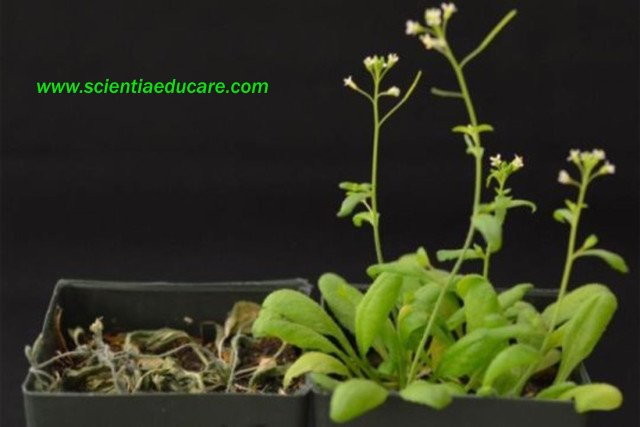
Sean Cutler’s lab introduced the engineered receptor into transgenic Arabidopsis to establish if it was sufficient to improve survival after drought, one measure of drought tolerance. The transgenic (right) but not non-transgenic plants (left) show improved survival after an extended drought. In this experiment water is withheld for 12 days, which cause severe wilting, and the plants are then re-watered to assess survival.

UC Riverside-led research in synthetic biology provides a strategy that has reprogrammed plants to consume less water after they are exposed to an agrochemical, opening new doors for crop improvement.

Crops and other plants are constantly faced with adverse environmental conditions, such as rising temperatures (2014 was the warmest year on record) and lessening fresh water supplies, which lower yield and cost farmers billions of dollars annually.

Drought is a major environmental stress factor affecting plant growth and development. When plants encounter drought, they naturally produce abscisic acid (ABA), a stress hormone that inhibits plant growth and reduces water consumption. Specifically, the hormone turns on a receptor (special protein) in plants when it binds to the receptor like a hand fitting into a glove, resulting in beneficial changes — such as the closing of guard cells on leaves, called stomata, to reduce water loss — that help the plants survive.

Blue-eyed humans have a single, common ancestor

0

scientia167

Variation in the colour of the eyes from brown to green can all be explained by the amount of melanin in the iris, but blue-eyed individuals only have a small degree of variation in the amount of melanin in their eyes.

New research shows that people with blue eyes have a single, common ancestor. A team at the University of Copenhagen have tracked down a genetic mutation which took place 6-10,000 years ago and is the cause of the eye colour of all blue-eyed humans alive on the planet today.

Sweet potato naturally ‘genetically modified’

0

scientia166

The sweet potato is a dicotyledonous plant that belongs to the family Convolvulaceae. Its large, starchy, sweet-tasting, tuberous roots are a root vegetable. The young leaves and shoots are sometimes eaten as greens.

Sweet potatoes from all over the world naturally contain genes from the bacterium Agrobacterium. Researchers from UGent and the International Potato Institute (CIP) publish this discovery on the website of PNAS (Proceedings of the National Academy of Sciences of the United States of America). Later it will be on the cover of this magazine. Sweet potato is one of the most important food crops for human consumption in the world. Because of the presence of this “foreign” DNA, sweet potato can be seen as a “natural GMO.”

sweat might make you smell sweeter

0

scientia161

Scientists have developed a fragrance-delivery system that works overtime when you perspire

Scientists have created a scent-delivery system that releases a pleasant fragrance when you sweat. Apply it to the skin, and the more you sweat the better you’ll smell. That’s because the perfume only gets released upon contact with moisture.

Chemists at Queen’s University Belfast in Northern Ireland combined two compounds to create their new system. One chemical is alcohol-based. This is the nice-smelling perfume. The other chemical is an ionic liquid. It’s a type of salt that is liquid at room temperature.

Ionic liquids are made of ions — molecules that have lost or gained one or more electrons. If the molecule loses electrons, it will have a positive charge. If it gains electrons, it gets a negative charge. Ionic liquids contain the same number of positive and negative ions. This makes the liquid neutral, with no overall electric charge. In general, ionic liquids also have no smell.

When the perfume and ionic liquid are mixed together, a chemical reaction occurs. This bonds the molecules to each together. The reaction also temporarily inactivates the perfume’s molecules. So when applied to the skin, the new perfume initially has no scent.

But adding water — or sweat — breaks the bond between the molecules. That releases the scent into the air. The researchers experimented with two different fragrances. One smelled musky. The other had a sweet, fruity smell.

For more details Please! Refer the Website: Click Here

                Best Wishes From www.scientiaeducare.com

Helping you choose a successful career….


Latest Post

Environmental Biology

error: Content is protected !!