Home Blog Page 318

New Courses In Sport and Wellness – Healthy Living

0

Healthy-Living
Sports and Wellness curriculum is based on the philosophy of education through the physical as well cognitive, moral, social, ethical and aesthetic domains in order to nurture healthy and active individuals who will be responsible for their personal well-being and health. These courses provides a multi-dimensional approach to developing the student holistically through sports and games. Physical activity will continue to be the basis of the programme while the curriculum will be broadened to include other aspects targeted at developing students’ critical and creative thinking skills, character and leadership development.

The Sports and Wellness programme’s goal of ‘Living Life with Vigour and Vitality’ envisages a person with a zest for life. It encapsulates an individual’s commitment to lead a healthy and dynamic life, developing the strengths of mind and body and building a capacity for wellness and survival. Today, dispite the demand, there is still a shortage of skilled workers and the industry is expected to require over six lakh additional workers in the next five years. In order to meet the rising demand, a number of new spa therapy, health and sport institutes have come up across the country and they offer anything but the conventional degree in nutrition and sport management.

Instead, you can also find interesting new options like a degree in spa or salon management, yogic science, cosmetology or the therapeutic massage and more. The list of new courses are as below: Yogic Science at Ayush and Health Science University, Raipur Spa Therapy at Ananda Spa Institute, Hyderabad Sports Coaching at Cardiff Metropolitan University, UK Sports Nutrition at BMN Home Science College, Mumbai Salon Management at MTI College, USA Cosmetology at Ragency Beauty Institute, USA Studies reveal that careers related to exercise, wellness, and health promotion are projected to grow faster than average and that job prospects in these fields are favorable. The rising cost of healthcare, an aging population, and concerns about childhood obesity have increased the need for individuals trained in physical activity, fitness, wellness, and health promotion. As healthcare costs continue to rise, insurance companies, employers, and governments are attempting to find ways to curb costs.

One of the more cost-effective ways is to employ individuals prepared to teach people how to become and remain physically active, increase their fitness, and live healthy lives. These employment areas are expected to gain jobs because an increasing number of people are spending time and money on fitness and more businesses are recognizing the benefits of health and fitness programs for their employees. As job opportunities grow, so have the various career specializations and the new trend in the sector is to specialise under a specialization. So, if sports and wellness is an area that excites you, then what are you waiting for? Get ready to start hunting for a specialization that suits your interest.

IGNOU offers new programme in Fruits and Vegetables processing

0

IGNOU-new-programme

Indira Gandhi National Open University (IGNOU) invites application for a one year “Diploma in Value Added Products from Fruits and Vegetables” (DVAPFV) Programme for July 2013 session. This programme was developed with financial support of Ministry of Food Processing Industries (MoFPI), Government of India. This diploma programme intends to inculcate vocational and entrepreneurial skills to widen employment opportunities, particularly among rural youth and the disadvantaged sections of the society as well as self employment.

The main objective of the programme is to provide the knowledge & skills for minimizing the post-harvest losses and production of value added food products, develop human resource for post harvest management and for primary processing of fruits and vegetables produce at the production areas/ clusters. The minimum duration of the diploma programme is one year. However, the candidate has the flexibility of completing the programme within four years’ time.

The eligibility requirement for this certificate programme is 10+2 pass-outs or Bachelor Preparatory Programme (BPP) from IGNOU. The programme fee is Rs. 12,000. The programme is offered in English and Hindi medium. All the interested candidates from rural areas and below poverty line urban candidates can avail 50 per cent fee concession on submission of valid proof. For details, visit IGNOU Website- www.ignou.ac.in or contact nearest IGNOU Regional Centre/Study Centre. Prospectus can be obtained from Regional Centres in person in Rs.200/-, or by post by sending a DD of Rs.250/- in favour of IGNOU, New Delhi, to Registrar (Student Registration Division), Indira Gandhi National Open University, Maidan Garhi, New Delhi-68.

Bangalore University to start five new courses in Finance, Banking

0

Bangalore-University

Bangalore University (BU) had a collaboration between the Department of Higher Education and Bombay Stock Exchange (BSE), which has led the university to start new courses. University decided to start five new courses in Finance and Banking from this academic year 2013-14. The new courses are: B.Com Capital Markets (Full time, 3 years). Postgraduate Diploma in Banking and Finance (Full time, 1 year).

PG Certificate in Banking Operations (Full time, 4 months). PG Programme in Financial Applications for engineers and postgraduates (Full time, 6 months). Certified Financial Market Associate (Part- time, 10 hours a week for 4 months). Karnataka state Higher Education minister R V Deshpande said, “The BSE has agreed to provide the catalogue of courses to universities and colleges. The colleges, which choose to launch these courses, will have a revenue sharing agreement, and the faculty will be trained and certified by the BSE, which will also provide curriculum and course material. It will conduct evaluations and co-certify the programmes along with the university.

The state has seen a spurt in demand by students opting for commerce and finance streams right from the undergraduate level. Keeping in mind the specialised nature of work and rapid changes in the industry, there is a need to design and deliver a contemporary course in line with industry requirements,” he added.

University of Mumbai introduces new courses

0

University-Of-Mumbai

The Centre for Extra Mural Studies, University of Mumbai has introduced new courses commencing from January-February 2014. The new courses are: Gardening Course in Marathi Garden Craft Course in English Ornamental Aquarium Course The gardening course in Marathi. It is an intensive course for gardening and farmhouse makers, will commence from 25th January 2014 and will go on till July 2014. The garden craft course in English, is a 15 sessions course meant for small gardens, and ornamental gardening, will commence from 08th February 2014.

The ornamental aquarium fish keeping and breeding will cover training in setting up an aquarium, maintenance, aquatic flora, types of freshwater ornamental fish, one session in marine aquarium setting and maintenance, preparing fish foods, breeding techniques of fresh water ornamental fish. This course will commence from 08th February 2014.

Delhi University to Introduce Forensic Sciences Course

0

Delhi-University

Students aspiring to study forensic sciences can now apply at Delhi University as the university has introduced the course this academic year, an official said. However, the academic council is yet to give its approval on how many and which colleges will have this course. The University of Delhi is trying to make the course available in three or four colleges. Sri Guru Tegh Bahadur Khalsa College has already been given the approval.

“The course has been introduced by the vice chancellor after he was told that there is dearth of forensic scientists and experts in para-military forces in the country,” Malay Neerav, Delhi University joint dean of students welfare and media co-ordinator, said at a press conference. The option of choosing the course is also available in the optical mark registration (OMR) form. However, a star mark says conditions apply.

UGC Approves B.Voc Course In Bharathiar University

0

Bharathiar-University

The University of Grants Commission (UGC), New Delhi has approved Bachelor of Vocational Course (B.Voc) in Bharathiar University, Coimbatore. The admission process for this new course in its constituent colleges, will commence soon for the academic year 2014. University offers B.Voc in: Business Process and Data Analytics Multimedia and Animation According to V-C G James Pitchai, the UGC gave permission to offer B.Voc in Business Process and Data Analytics, and in Multimedia and Animation. UGC also granted Rs 1.85 crore to start these courses in the University. University has its constituent colleges in Valparai, Gudalur and Modakurichi.

Tamil Nadu introduces 163 new courses in Arts and Science colleges

0

Tamil-Nadu

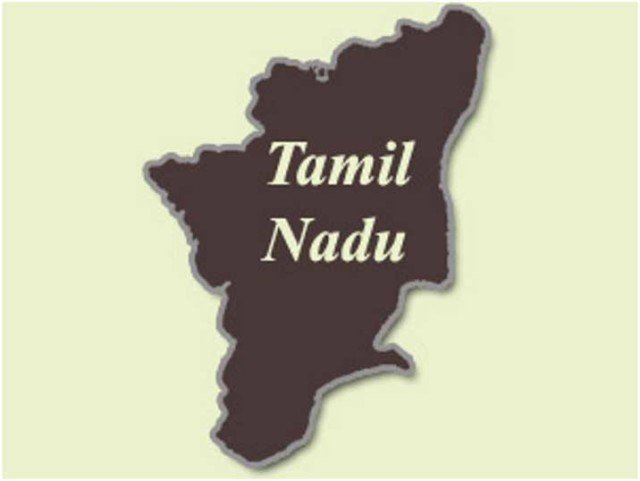
As part of her government’s effort to give a boost to the Higher Education sector, Tamil Nadu Chief Minister J Jayalalithaa has proposed introducing 163 new courses in Arts and Science colleges in the state this year. This will include 62 M.Phil and 52 Ph.d courses besides those in UG and PG streams, she informed the Tamil Nadu Assembly.

Jayalalithaa said that since taking over in 2011, her government had introduced 797 new courses, which had attracted more students and resulting in Gross Enrolment Ratio reaching 38.2%. Making a number of announcements in the Higher education department, she proposed filling up of over 1,100 teaching vacancies in various government colleges through Teachers’ Recruitment Board. Further, a premier teachers’ training institute located in Chennai will be moved to a sprawling premises near the city at Karappakkam and a building will be constructed at a cost of Rs 95 crore for this purpose, she said. Her other announcements included fund allocation to premier educational institutions including Anna University towards upgrading infrastructure and a new Arts and Science college at Mayiladuthurai.

Gujarat University declared PG entrance results

0

Gujarat_University

AHMEDABAD: The Gujarat University has declared the result of the entrance examination for the post graduate medical examination which was conducted on Sunday. The Gujarat University organized the examination and declared the answer key on the same day.

GU officials said that of the 1,085 students who appeared only 380 cleared the examination as they could not get score above 200 marks from the total of 400 marks. The GU officials said that hence for the 300 post graduate medical seats there are only 380 candidates.

The officials said that the student who topped the list secured 315 marks out of the total of 400 marks.

The Gujarat Secondary and Higher Secondary Education Board declared that the Gujarat Common Entrance Test (GUJCeT) for the admission to the medical and para-medical courses will be held on May 7.

President award for central universities

0

president-pranab-mukherjee
NEW DELHI: President Pranab Mukherjee presented visitor’s Awards for Central Universities in the categories of ‘Best University’, ‘Innovation’ and ‘Research’ for the year 2015 at a function held at Rashtrapati Bhavan on Wednesday.

The University of Hyderabad received ‘Best University’ Award for academic excellence and overall outstanding work. ‘Innovation’ Award was presented to Prof Vijay K Chaudhary and Dr Amita Gupta of University of Delhi for their invention of ‘TB Confirm’, a rapid diagnostic test for Tuberculosis. The ‘Research’ Award was received by Cosmology and Astrophysics Research Group, Centre for Theoretical Physics, Jamia Millia Islamia for path breaking research carried out in the field of Astrophysics and Cosmology. The Research Group comprises of Jamia Millia Islamia faculty – Prof. M. Sami, Prof Sushant G Ghosh, Prof Sanjay Jhingan & Prof Anjan Ananda Sen.

The ‘Best University’ received a Citation and Trophy while winners of Visitor’s Award for ‘Innovation’ and ‘Research’ received a Citation and cash award of Rs one lakh.

The President had announced institution of these awards at the Vice Chancellors’ Conference last year with the aim of promoting healthy competition amongst Central Universities and motivating them to adopt best practices from across the world.

CBSE exams to get tougher

0

school-girls
CHENNAI: If the pre-boards are any indication, scoring in the CBSE Class 12 board examination is set to get a little more difficult than usual. Changes have been made in the exam pattern, shifting from ‘objective-type’ questions to ‘application-based’ ones.

The number of questions in subjects such as political science, economics, business studies and accountancy was reduced, while the number of “long answer” questions increased and two-three markers reduced. These and other changes were noticed in the sample papers students attempted recently.

The political science paper has just 27 questions against the 31 earlier. Now there are five one-mark and five two-mark questions instead of 10 of each, making it easy for below-average children to score high. Now there are more analytical questions.

The emphasis on long answers will please college teachers, especially those in humanities and social sciences. Some schoolteachers feel bringing sudden changes defeats the purpose of the continuous and comprehensive evaluation (CCE) system, aimed at reducing stress.

The mathematics paper will have 26 questions instead of 29 and business studies 25 instead of 30. Students say they cannot choose among six-mark questions, which required an elaborate answer, whereas earlier every question had a choice. There is a clear shift from short-answer questions to the long analytical kind, teachers said.

Around half the questions in the accountancy sample paper tested candidates on higher order thinking skills (HOTS).The application-based or interdisciplinary questions don’t ask only what is in the textbook. About 70% of the business studies paper had such questions, students said. “Some students — already performing well — are enjoying them. We’re afraid they’ll impact performance of those who take time to assimilate concepts,” said a teacher.

Others are not as perturbed. Asan Memorial Senior Secondary School principal Suma Padmanaban, said there were some application-based questions in chemistry and economics in pre-boards but added that this had been the CBSE objective for a while. “They don’t want the exams to be textbook based, because it doesn’t really make sense at the end of the day.”

Teachers have been including such questions in school exams as preparation. “Direct questions are included to help students who find academics difficult to make the grade. In the boards it is understood that the difficulty levels will be such that all students are tested and to make them think,” said Padmanabhan

Modern Senior Secondary School principal K Mohana said the number of HOTS and interdisciplinary questions had increased but the decisions were based on the subject committee recommendations and were part of the curriculum documents released last year. “Nothing is out of syllabus,” she said.

“The idea,” said a CBSE official, “is to de-emphasize rote-learning and move towards more exploratory and evaluative lessons.”

CBSE to launch pre-exam counselling for students and parents

0

counseling
CHANDIGARH: With Board exams nearing the anxiety levels of class X and XII students preparing for board exams are on the rise and to help students cope well with the situation Central Board for Secondary education will launch its pre-examination counselling for students and parents on Monday, February 2. The facility will continue till April 20.

There will be four ways in which students as well as parents can reach out for a helping hand at CBSE. They can use the option of Tele-counselling, Question-Answer columns, online counseling and CBSE website.

This year 72 Principals, trained counsellors from CBSE affiliated government and private schools and few psychologists will participate in Tele-Counselling and address exam related psychological problems of the students. 62 of them are available in India while 10 are located in Nepal, Kingdom of Saudi Arabia (Al Khobar, Sultnate of Oman), UAE (Sharjah, Ras Al Khaimah) and Kuwait.

From city there are two counselors, rakesh Sachdeva principal DAv 15 and Madhu behl, principal KBDAV-7 who cater to calls not just from Chandigarh but from the entire country. Talking about what kind of queries Sachdeva said, “The students and parents are full of anxiety during these days as exams are heading. Where students want to know how they can memorize well parents want to know that how to get their wards to study. Though the designated time is 3.00pm to 4.00pm we get calls day and night. The rush remains the same until the exams begin.”

This is the 18th consecutive year that CBSE will provide psychological counselling services to students at the time of preparation as well as during the examinations to overcome exam related stress.

The CBSE annual counselling is an outreach programme which is carefully designed keeping the heterogeneity of students’ population and geographical spread. Multiple modes of communication such as telephonic counselling, Question Answer columns in newspapers and online counselling through CBSE website are used to reach out to more and more examinees during this phase.

How to reach out

1. Tele-Couselling service- This is offered by trained counselors and Principals from within CBSE affiliated schools located in and outside India. It is a voluntary, free of cost service provided by the participants.

Centralized Toll Free Access in India– Students can dial a toll free number 1800 11 8004 from any part of the country which will give centralized access to CBSE helpline. While the general queries will be answered by the operators, students will be connected to the principals or counselors in case of exam related anxiety or stress.

Counselling for Specially Able Children for the sixth year CBSE has arranged to provide counselling to specially able children to take care of the needs and anxiety of special children.

2. Question-Answer Columns- Experts will answer queries of students through weekly question answer columns to be published in national newspapers during the month of February.

3. Online Counselling— For On-line counselling directoracad.cbse@nic.in and counselling.cecbse@gmail.com can also be contacted.

4. CBSE website— Information related to examinations and techniques to cope with exam related anxiety is also provided at the CBSE website www.cbse.nic.in through micro link-Helpline.

Chandigarh Counsellors contact

Rakesh Sachdeva Principal DAV-15—9855613484 Madhu Bahl, Principal KBDAV-07— 9417006590 Time—3.00pm to 4.00pm

CBSE exam dates-

Class X- March 2 Class XII— March 2

Rohan Murty to be inducted into education advisory board

0

Rohan-Murty

NEW DELHI: Rohan Narayan Murty, the man behind the ambitious Murty Classics of India, will be made a member of the Central Advisory Board of Education (CABE), the oldest and highest advisory body on education.

Murty’s name is among the host of scholars and policy planners being inducted into CABE. Murty, alumni of Cornell University and Harvard University and son of Infosys co-founder Narayan Murthy, conceived the idea of getting the classical texts of India published and made a generous contribution. Already, five volumes have come out with many more titles expected in the next few months.

Highly placed sources said CABE will be reconstituted soon. Others likely to make it to CABE are S A Bari, vice-chancellor of central university of Gujarat, Jawaharlal Kaul, vice-chancellor, Hemwati Nandan Bahuguna Garhwal Central University and few others.

However, the reconstitution of CABE could hit a small stumbling block and could possibly lead to controversy as few members appointed during the UPA regime have not resigned and would rather wait for the new government to take action. Notable among them is activist Teesta Setalvad who is in CABE for the second term. Ministry sources said, “We would like them to resign on their own. The new government should be given the freedom to constitute its own advisory body.” Sources also pointed out that unlike the Vajpayee regime when CABE was discontinued for six years, this time the government has decided to keep it going.

CABE was first established in 1920 and dissolved in 1923. CABE with representations from states and civil society has been responsible for initiating widespread discussion on landmark legislations like the right to education. Sources said CABE will take up discussion on the new education policy that promises to reach out to villages.

Colleges woo students with integrated courses

0

graduation-caps
CHENNAI: Chennai-based B-school, Great Lakes Institute of Management (GLIM), is setting up a university to offer integrated programme in engineering and management.

Spread over 30 acres, the Great Lakes University in Sri City is expected to commence its academic year in 2017. Its first batch will have 180 students and full time faculty of 40 professors.

“During the first four years, students would do course work in industrial engineering, electronics and computer science. In the fifth year, there would be a management programme,” GLIM founder and dean Bala V Balachandran said.

He added the programme would be industry-relevant. “We believe in money value of time and hence this offering,” Balachandran said.

The total cost of the project is around Rs 100 crore. “Over 50% of it would be funded through internal accruals. We would also look for partnerships. The land would be available to us on a subsidized basis as we are planning to take a long lease,” Balachandran said.

GLIM has two campuses in Manamai, Chennai and one in Gurgaon.

The university would offer an integrated degree. “This university in Sri City would be a state university (Andhra Pradesh) so that would allow greater flexibility in course curriculum. The final degree would to similar to ones offered by institutes like BITS Pilani,” GLIM executive director S Sriram said.

GLIM is among many reputed institutions, which have devised a unique engineering-management curriculum to suit market requirements.

VIT University (in Vellore) has started offering a double major in engineering from 2012-13 onwards. The first batch is expected to graduate by 2015 or 2016 as it’s a flexible system.

“It was noticed that many engineering graduates seek their second degree in management. Hence we decided to offer a combined degree that a student can pursue (by putting into proper use of his or her free time like summer and winter vacations),” VIT University founder and chancellor G Viswananthan said.

But many such courses are yet to receive approval from regulatory agencies like All India Council for Technical Education or University Grants Commission (UGC), which has laid down norms for integrated courses.

Under UGC, an institute can start such a programme provided it ensures the syllabus is not compromised more than 20%.

“Integrated programmes offered by universities may claim to have complied with the norms and have syllabus as per market needs, but my analysis shows most institutions fail to do so,” said J P Gandhi, an educational consultant.

In case the course offers an exit option after three or four years depending on the undergraduate stream, then the UGC Gazette in 2014 says the total duration of the course should be equal to the sum of the course period of the UG and PG courses.

While most universities and colleges have either stopped the integrated course or have amended the programme, some IITs and NITs are yet to follow the rule.

Not many willing to recruit integrated graduates

0

graduates

COIMBATORE: The popularity of integrated courses is high among students abroad and now they are gaining acceptance here as well.

Apart from the engineering-management combo, there are undergrad-postgraduate programmes in medical nanotechnology, big data management, mathematics etc on offer.

The trend may well catch on provided universities and colleges tailor courses to suit the needs of potential recruiters or to develop expertise in specific fields.

Sastra University, for instance, has an MTech in medical nanotechnology, which is a five-year integrated programme.

Vellore Institute of Technology, Amrita University, Anna University and other state varsities have integrated programmes in niche areas.

The choice ranges from big data management to English and mathematics. But the danger is the idea of an integrated programme may turn into a fad which is copied with no thought for its consequences.

Mallik Sundharam, regional director, ELS Education Services, said, “The need for integrated programmes is rising. While universities are coming up with programmes to suit Indian markets, they are also adapting to foreign cultures…I have seen institutions in Bengaluru adapting to international standards. And their performance is pleasing.”

Some institutions are certainly analysing market and industry requirements before designing such courses. “Syllabus of the two courses are integrated carefully, making sure no essentials are missed out. Subjects are added or deleted based on market needs,” Mallik said. “For example, a blend of computer science and electronics is preferred by many students as it helps them understand industry trends better.”

S Vaidhyasubramaniam, dean, planning and development, Sastra University said, “Integrated courses come with innovation, but the best innovation in all these courses is time. A student completes both bachelors and masters in one programme.” He said universities and institutes are also trying to innovate in a way that students, who pursue integrated programs, can thereafter adapt to research through a PhD.

However, there are some drawbacks as well to the business of integrating undergraduate and postgraduate courses. One that most universities face is the recruiter’s apprehension. A senior professor from a deemed university said, “Most universities face the challenge of convincing recruiters to pick integrated students. Recruiters prefer plain graduates as they are easy to train and have to paid less.” On the other hand, students graduating with an integrated programme may well seem overqualified for a trainee’s job in certain fields.

Some career consultants say an integrated engineering-management programme has still not caught the imagination of students. “Top scorers would always like to pursue a management degree at a better university,” said consultant Jayaprakash Gandhi said.

He added that at the undergraduate level, many students don’t like getting tied down to an integrated programme as they feel it would limit their career choices immediately after class XII. “Also, the best B-schools across the globe prefer students with work experience. That is because historically MBA has been viewed a professional qualification for future managers,” Gandhi said.

A senior academician, who did not want to be named, pointed out that some integrated courses are only created to accommodate more students. “The idea is to admit more students every year. When students do not get admission into top courses, these integrated courses are their second option,” he said. One of the deemed universities admitted that some of their integrated programmes are not attracting students.

Class X CBSE exam system to include qualitative education

0

student-exam

Class X exam system conducted by CBSE has been undergoing changes from past few years. The National Democratic Alliance (NDA) government is mulling over the idea of bringing change in the exam system with ‘qualitative education full of sanskars’.

Minister of State in the HRD Ministry Ram Shankar Katheria on Wednesday said the government has also decided to open a model degree college in every block. “A committee has been formed to go through the existing and the earlier system. I received several complaints from the parents and the teachers regarding the existing system. Efforts would be made to provide qualitative education full of sanskars,” Katheria said while talking to reporters in Nagla Chandra Bhan. Katheria also said that a model degree college would be opened in every block.

“Land for the colleges would be provided by the state government while the funding would be done by the Union government,” he said. The committee is going through in detail about the programmes to be celebrated during Deen Dayal Upadhyay centenary celebration.

When asked if Union government would set up a central university in Nagala Chandra Bhan to commemorate centenary celebration of late Deen Dayal Upadhyay, he said “we can not declare a Central university in Nagla Chandra Bhan since the land has to be provided by the state government.”

He said that he was of the opinion that Pradhan Mantri Skill Development Scheme should be introduced in Nagla Chandra Bhan for the betterment of the neighbouring villages.

On the results of Delhi, he admitted that party had never expected such a result. “We have accepted our defeat, however, it was not defeat of Modi,” he said to a question.
On the reforms in Ambedkar University he said that on his instructions the results of last exam have been declared.
“There would be no compromise with admission, exams, result and administration of the university, the Vice Chancellor has been told clearly, he concluded.
PTI

Tips from last year’s CBSE topper Sarthak Agrawal on study techniques

0

saarthak-aggarwal
In an exclusive interview with India Today, the last year’s topper Sarthak Agrawal talks about pressure of exams and his study techniques. The bright mind talked about his schedule and shared the things he followed for his board exams preparation.

  • How to Study?: All you require to do is follow up with your syllabus and study for an hour or two
  • The best time to study: You must study whenever you are fresh and when you can concentrate better, which for him is morning and the evening
  • Stress busters: Study must be your priority but you can’t just shift gears this easy and become a bookworm. There is no need to sacrifice your leisure time and study according to your timetable
  • Read ways to bust stress – https://www.youtube.com/watch?v=gzNSzkNuIqA
  • Battling the parental pressure: More than students, it is the parents who put pressure on their kids. Try not to lose your concentration and stay focused
  • Try your best: There is no need to be influenced by other things and you should try your best

No braille textbooks for sightless college students in Odisha

0

braille-book

BERHAMPUR: Absence of braille textbooks have forced sightless college students in Odisha to depend on either audio tapes or reading assistants.

“We are facing much difficulty to prepare for examinations due to lack of braille books. Quite often, we are unable to pick up what reading assistants dictate to us,” said Krushna Chandra Moharana, a second year student of Khallikote Autonomous College here.

The problem is plaguing round 200 blind students studying in various colleges of the state, Bijay Kumar Rath of Odisha Blind Society said on Wednesday.

The state has only one braille press here. Printing braille books for college students is difficult as syllabi are different for universities, manager of Louise Braille Press Prakash Narayan Rath said.

“We will try to produce textbooks for college students from next year as the government has decided to make syllabus uniform for universities,” he added.

Govt moots KG to PG institutions

0

Kindergarten

NEW DELHI: The government could roll out an ambitious programme of setting up of ‘kindergarten to post graduate’ institutions in educationally-backward districts of the country.

The proposal is under consideration of the HRD Ministry and could find mention in the Union Budget to be tabled on February 28, sources in the ministry said. While the concept is not new to the education sector and such institutions exist in some states, the ministry seeks to make the most out of it offering education to the deprived lot who have to migrate to distant places and big cities to pursue higher education, they said.

A student enrolling into kindergarten in such institutions enjoy admission preferences as they are promoted from school education to higher education under one roof.

Jamia Milia Islamia, Viswa Bharati and Banasthali universities are few such institutions.

The Chhattisgarh government had also announced plans to set up such institutions for promoting tribal education in the state.

The sources said the complexes could be set up under the PPP mode on a 50:50 cost sharing basis between the government and private players investing in the education sector. The state government could also be asked to provide land free of cost.

Meanwhile, the government is also understood to have been planning to raise the education cess to two per cent from one per cent at present, mopping up some Rs 14,000 crore annually to fund the expanding education sector and funding the new IITs and IIMs.

Nursery admissions to be digitalised

0

school-digitised

Gone are the days when parents have to visit schools for admissions. CBSE schools have made it more easy for the parents as the online admission portal has been opened for nursery in Chennai. The initiative was taken positively both by schools and parents.

Schools have an upper hand of easily downloading the data provided by the parents and analyse it. The data furthermore can be uploaded in the school data with a click.

As quoted in Times of India, Ajeeth Prasad Jain, Senior Principal of Bhavan’s Rajaji vidyasharam said, “The school has made the process easier for schools as well. Now, we can download the data easily and analyse it. Once the child is admitted his data can be uploaded in the schools registry in a click.”

Bhavan’s Rajaji vidyasharam, SBO school & junior college, Maharishi Vidyamandir and Chinmaya Vidyalayas located in Kilpauk, Anna Nagar and Virugambakkam were some of the schools which opened counters for parents to buy applications and fill in online.

Parents fell that the online system is much more transparent than the offline. The system of first come first serve had a drawback for admissions as parents residing in another part of country or overseas cannot apply because of distance constraints, online admissions fills the gap.

Architect CJ Kausalraman felt at ease realising the difference between the time when he enrolled for his first child and now when he enrolled his second child. He says, “I could remember standing in the rain in front of a school in Anna Nagar with an umbrella to get the application. It was a long queue. I am so relieved now as I do not have to go through the same thing.”

The college-going boy can’t be a molester…or can he?

0

molesting
On January 16, a 24-year-old boy was arrested by the Delhi Police for killing his 20-year-old girlfriend after she had started ignoring him. He had dumped her dead body in a park and run away from the city . Creepy? The boy was a Delhi University student. If that unsettling bit of information takes you back to the 2013 incident when a jilted lover from JNU – armed with a knife, an axe, a countrymade pistol and a bottle of poison – had attacked his female classmate and then committed suicide, you are not the only one grappling with the question, `How do the boys even from the supposedly liberated and gender-neutral spaces act like patriarchal goondas in such cases?’ It is largely assumed that a student of a so-called `elite’ university in a metropolis would have a more respectful attitude towards women, owing to the liberal atmosphere and progressive education they are exposed to, but incidents like these are probably indicators that the reality is quite different. College-goers from the city tell us why, according to them, even students from elite institutions and universities are involved in gender crimes and why they’d rather not ignore this as a one-off incident.

FORGET SELF-DEFENCE, UNIVERSITIES NEED ‘HOW TO ACCEPT BEING REJECTED’ WORKSHOPS FOR GUYS

Surilee, a JNU student, says, “We all like to believe in the happy idea that an educated boy would be less patriarchal, but that’s not always the reality . I know JNU guys who say that a girl who is willing to get drunk with them is basically asking them to assault her in public. My friends have dated IIT guys who thought that she should not get a job because engineers earn a lot anyway . I have met NSIT and DTU (Delhi Technological University) guys who think that DU makes some girls a little too feminist and aggressive, making them less suitable for dating. Education and awareness don’t always go together, maybe. If schools and parents, too, could begin to teach guys that slamming your hand in the window because your crush said `no’ isn’t very manly, we might have a better chance.”

Anika*, a DU graduate who is pursuing her masters at JNU, says, ” All the gender forums and workshops for girls focus on lending an ear to girls and helping them out, but I think what we really need are workshops where boys are taught that it’s quite cool to be able to deal with rejection gracefully. Gender crimes happen even on university campuses because a large number of the male students are brought up with the sense that only the man can say `no’. Gender sensitisation on campus should include getting them to accept `no’ for an answer from women.”

Akshay , an IIT-Kanpur alumnus and an MA (English) student at DU, says, ” At IIT, you become very intellectual, but there’s not a lot of gender equality talk. So, I thought that at DU, I’d get more of the liberal talk and that’s why I opted for a humanities course, but I was probably being too optimistic. Of course, many of the students can go on about why patriarchy s****, but there are also a lot of them who think that it’s okay to tell their girlfriends to not talk to other guys or that it’s only legit to call her a s*** because she dumped them. There’s an internal hierarchy and girls from many courses are quite okay with being bossed around by their boyfriends.”

THIS REMINDS YOU THAT SOMETIMES, A COLLEGE STUDENT NEEDS TO RETHINK THINGS JUST AS MUCH AS THE KHAPS DO

Ashna Malik, a DU graduate, says, “My first reaction was, `Oh! A DU girl student has been killed by some psychopath again.It took me a while to even realise that the killer is also a DU student. You’d mostly think that the college-going person would be at the receiving end of this kind of violence. But this is like the `man bites dog’ news, in the sense that the supposedly `forwardthinking’ DU student became a threat to the non-DU student. And it reminds you that sometimes, a college student needs to rethink things just as much as the khaps do.”

SADLY, ALL THEORIES SEEM TO FAIL WHEN IT COMES TO GIRLS’ SAFETY

Richa, a literature student at JNU, says, “There’s this perception that a guy from DU, JNU, Presidency University or the like would be the safe guy to hang out with because he is less likely to think that slitting his wrists or hitting you because you talked to some other guy or forcibly kissing you, is romantic. But frustratingly enough, all theories fall flat when it comes to women’s safety. Be it an illiterate 40-year-old stalker or a 20-year-old guy from a fancy university, you can almost never decide who will turn into a jilted lover and attack you.”

CORRESPONDENCE STUDENTS NEED MORE EXPOSURE

According to the SHO Mayapuri (West Delhi), the boy was doing a BA program as a correspondence student from DU and multimedia course from a private institute, and the girl was doing JBT from an institute in Najafgarh. Vanika*, a Hindu College student, says, “The moment I found out that the guy is a correspondence student, the incident, as sick as it is, made some sense. On the face of it, the statement might sound classist or discriminatory , but when you say a DU correspondence student, the DU tag is sort of discounted. How many `gendered hostel curfew protests’ are correspondence students a part of ? How many `gender sensitisation committee meetings’ do they get to attend? They don’t get the kind of exposure a regular DU student does – like students from Sanskrit, Geology or the less fancy courses – but if there can be a way to bridge that gap, that would be great. SOL and regular DU colleges are like parallel universes, and some intersection might help.”

WHAT’S THE UNIVERSITY GOT TO DO WITH IT? BUT MAYBE IT SHOULD

Sara*, an LSR student, adds, “Hearing about spurned lovers throwing acid on girls or slapping them or raping them or even attempting to killattack them is very common. Getting to know that the spurned lover was from a space where people are working hard to achieve parity in terms of gender is, thankfully , a little less common. So, when you hear that a DU guy killed a girl, `but why drag DU into it?’ might be a natural response, and that’s what I have been hearing some people say since this incident came to light. But DU has to be involved because that’s where they teach you to question the notions of love and gender that you grow up with. I think that even if we have a single DU guy killing his girlfriend in 2015 and a single JNU guy killing a girl over his bruised ego in 2013, that doesn’t mean these are two exceptions in otherwise progressive spaces. That means these are areas that need more attention.”

(*Names changed on request)

STUDENTS-TURNED-OTHELLOS

2014, Hyderabad: Sai Kiran Reddy, 22, an angry college student, stabbed and injured his girlfriend Neha, 19, with a 15-inch long knife inside the classroom and attempted to end his life by stabbing himself because she had been show ing interest in another boy

2013, Delhi: 23-year-old JNU student Akash Kumar attacked and killed Roshni Kumari, his classmate, because she did not reciprocate his feelings 2013, Delhi: 20-year-old Ramakant Sontakke, an ITI student, stabbed his girlfriend to death because he suspected her of two-timing

2012, Mumbai: Payal Balsara, a 21-year-old Chetana College student, was stabbed eight times with a kitchen knife by her classmate and angry lover Nikhil Bankar. He committed suicide and she succumbed to her injuries

2010, Delhi: Gaurav Verma, an IIT-Roorkee student, was arrested while running away, after he had murdered his girlfriend at a hotel in Shimla. Pragati, the 22 year-old victim, was a student of textile designing at IIT-Delhi


Latest Post

Environmental Biology

error: Content is protected !!