



CLASS: IX :: Gravitation
CLASS: IX NCERT (CBSE)
Gravitation
SUMMARY
Freely falling object: Is the object which moves towards the Earth due to force of gravity
Acceleration due to gravity:...
CLASS: IX :: Force and Laws of Motion
CLASS: IX NCERT (CBSE)
Force and Laws of Motion
SUMMARY
If an object does not change its position with respect to time and the surroundings, it...
CLASS: IX :: Motion
CLASS: IX NCERT (CBSE)
Motion
Summary
• Motion: Whenever a body changes its position continuously with respect to the position of other bodies around it then it...
CLASS: IX :: Diversity in Living Organisms
CLASS: IX NCERT (CBSE)
Diversity in Living Organisms
SUMMARY
Aristotle, the Greek philosopher, classified animals based on whether they live on land, in water or in...
CLASS: IX :: Tissues
CLASS: IX NCERT (CBSE)
Tissues
SUMMARY
1) A group of cells, that are similar in structure and work together to achieve a particular function, forms a tissue.
2)...
CLASS: IX :: The Fundamental unit of Life
CLASS: IX NCERT (CBSE)
The Fundamental unit of Life
SUMMARY
All living organisms are made of cells. Marcello Malpighi, proposed that plants are made of tiny...

CLASS: IX :: Structure of the Atom
CLASS: IX NCERT (CBSE)
Structure of the Atom
Summary
• Atom is the smallest particle of an element, which maintains its identity throughout chemical and physical changes.
•...
CLASS: IX :: Atoms and Molecules
CLASS: IX NCERT (CBSE)
Atoms and Molecules
SUMMARY
• The law of conservation of mass states that the masses of the reactants and products remain unchanged.
• The...
CLASS: IX :: Is matter around us Pure
Is matter around us Pure
CLASS: IX NCERT (CBSE)
SUMMARY
• Matter is anything that occupies space and has mass
• Element is a pure substance, which...
CLASS: IX :: Matter in Our Surroundings
Matter in Our Surroundings
CLASS: IX NCERT (CBSE) Chemistry
SUMMARY
Matter is any substance that has mass and occupies space. Matter is made up of small...
Management of Natural Resources CLASS: X NCERT (CBSE) BIOLOGY
Summary
• Environment refers to the natural elements that make up the earth and surround living organisms
• The abiotic or physical aspects of the environment refer...
Magnetic Effects of Electric Current CLASS: X NCERT (CBSE) PHYSICS
Summary
• An electric current produces a magnetic field.
• A magnetic field exists in the region surrounding a magnet, in which the force of the...
Electricity CLASS: X NCERT (CBSE) PHYSICS
Summary
1) Electric potential is the condition that determines direction of flow of charge. Electrical potential at a point in an electric field is defined...
Human Eye and Colourful World CLASS: X NCERT (CBSE) PHYSICS
Summary
Accommodation of the Eye:The process by which the ciliary muscles change the focal length of an eye lens to focus distant or near objects...
Light-Reflection and Refraction CLASS: X NCERT (CBSE) PHYSICS
Summary
Reflection of Light
Light is a form of energy which can be reflected either by a plane mirror or spherical mirror. Depending upon the type...
Heredity and Evolution Class: X CBSE NCERT
Summary
An important result of the reproductive cycle is production of similar featured individuals for generations. The transmission of characteristics through successive generations refers to...
How do Organisms Reproduce CLASS: X NCERT (CBSE) BIOLOGY
SUMMARY
• Reproduction is defined as the production of individuals of the same species, that is the next generation of the species.
• There are basically...
Life Processes: Nutrition CLASS: X NCERT (CBSE) BIOLOGY
Summary
Nutrition can be defined as the process by which an organism obtains food that is used
to provide energy and materials for its life sustaining...
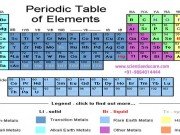
CLASS: X NCERT (CBSE) CHEMISTRY: For Class 10 : Periodic Classification of Elements
Summary
Periodic Classification of Elements
• The grouping of elements with similar properties together and the separation of elements with dissimilar properties is known as classification...
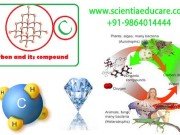
CLASS: X NCERT (CBSE) Chemistry: For Class 10 – Carbon and its...
Summary
Carbon and its Compounds
• Study of the compounds of carbon is organic chemistry. They form the basis of living organisms and the things around...