



Questions with Answers on Lysosomes: Cellular Waste Disposal Units
1. What are Lysosomes and What is Their Primary Function in Cells?
Answer:
Lysosomes are membrane-bound organelles found in animal cells, responsible for digesting and recycling...
MCQs on Lysosomes: Cellular Waste Disposal Units
1. What is the primary function of lysosomes in a cell?
A) Energy production
B) Protein synthesis
C) Waste breakdown and recycling
D) Photosynthesis
Answer: C) Waste breakdown and...
Membrane Proteins: Key Players in Cellular Dynamics
Introduction
Membrane proteins are critical components of biological membranes, contributing to their structure and function. These proteins facilitate various processes, including transport, signal transduction, enzymatic...
Questions and Answers on “Membrane Proteins: Types and Functions”
1. What are membrane proteins, and how are they classified?
Answer:
Membrane proteins are proteins associated with the cell membrane that perform various critical functions. They...
MCQs on “Membrane Proteins: Types and Functions”
1. What is the primary role of membrane proteins?
A) Providing energy to the cell
B) Facilitating chemical reactions
C) Transporting molecules across the membrane
D) Maintaining the...
The Dynamic Framework of Life: The Role of Cytoskeleton in Cell Shape and Transport
Introduction
The cytoskeleton is a complex, dynamic network of protein filaments found in the cytoplasm of eukaryotic cells. It is integral to a cell's structural...
Questions and Answers on “Role of Cytoskeleton in Cell Shape and Transport”
1. What is the cytoskeleton, and why is it essential for cells?
Answer:
The cytoskeleton is a dynamic network of protein filaments in the cytoplasm of...
MCQs on “Role of Cytoskeleton in Cell Shape and Transport”
1. What is the primary function of the cytoskeleton in cells?
a) Protein synthesis
b) Energy storage
c) Maintenance of cell shape and intracellular transport
d) DNA replication
Answer:...

The Central Hub of Life: Understanding the Nucleus in DNA Storage and Gene Regulation
Introduction
The nucleus, a defining feature of eukaryotic cells, is often referred to as the "control center" of the cell. Encased within a double membrane,...

Questions with Answers on “The Nucleus: DNA Storage and Gene Regulation”
Section 1: Structure and Function of the Nucleus
Describe the structure of the nuclear envelope and its significance.
Answer:
The nuclear envelope is a double membrane...

Multiple-Choice Questions with Answers on “The Nucleus: DNA Storage and Gene Regulation”
Section 1: Structure and Function of the Nucleus
Which of the following structures encloses the nucleus?
a) Plasma membrane
b) Nuclear envelope
c) Cytoplasmic reticulum
d) Golgi apparatus
Answer:...

The Cytoskeleton: Architecture and Function in Cellular Structure and Dynamics
Introduction:
The cytoskeleton is a complex network of protein filaments and tubules that provides structural support, shape, and organization to the cell. It is not...
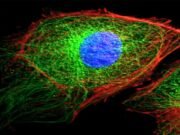
Questions with answers on “Cytoskeleton and Its Role in Cell Structure”
1. What is the cytoskeleton, and what are its main components? Explain the roles of microtubules, microfilaments, and intermediate filaments.
Answer:
The cytoskeleton is a network...
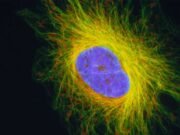
MCQs with answers on “Cytoskeleton and Its Role in Cell Structure”
1. What is the primary function of the cytoskeleton in a cell?
a) Protein synthesis
b) Cell division
c) Maintaining cell shape and structure
d) DNA replication
Answer: c)...

Endoplasmic Reticulum: The Heart of Cellular Functions – Smooth vs. Rough
Introduction
The endoplasmic reticulum (ER) is one of the most essential organelles in eukaryotic cells, playing a central role in multiple physiological functions such as...
Questions with answers on the topic “Endoplasmic Reticulum: Smooth vs. Rough Functions”
1. What is the role of the rough endoplasmic reticulum (RER) in protein synthesis? Explain its involvement in post-translational modifications.
Answer: The rough endoplasmic...
MCQs with answers on the topic “Endoplasmic Reticulum: Smooth vs. Rough Functions.”
1. What is the primary function of the rough endoplasmic reticulum (RER)?
a) Lipid synthesis
b) Protein synthesis
c) Detoxification
d) Carbohydrate synthesis
Answer:...

Lysosomes and Peroxisomes: Guardians of Cellular Waste Management
Lysosomes and Peroxisomes: Guardians of Cellular Waste Management
Introduction
Cells are the fundamental units of life, and their proper functioning depends on effective waste management systems....
Questions and Answers on Lysosomes and Peroxisomes: Cellular Waste Management
1. Describe the structure of lysosomes.
Lysosomes are membrane-bound spherical vesicles containing hydrolytic enzymes. Their membranes protect the cell from the enzymes within, which are...
MCQs with Answers on “Lysosomes and Peroxisomes: Cellular Waste Management”
1. What is the primary function of lysosomes in a cell?
A) Protein synthesis
B) Lipid storage
C) Cellular waste digestion
D) Energy production
Answer: C) Cellular waste digestion
2....