
Nagoya University, Japan: From Medical Roots to Global Research Powerhouse
Introduction
Located in Nagoya, the heart of Japan’s Chūbu region, Nagoya University has grown from its 1871 foundation as a medical school into one of the nation’s most distinguished research universities. Officially chartered as Nagoya Imperial University in 1939, it stands as the seventh Imperial University and is now a Designated National University under Japan’s top-tier classification. With a pioneering spirit anchored in freedom, openness, and innovation, Nagoya University nurtures “courageous intellectuals,” fuels Nobel Prize–winning research, and drives international academic engagement. Let’s explore its journey, academic offerings, infrastructure, research eminence, student support, and global reputation.
1. Establishment & Historical Evolution
- Roots trace back to 1871, when a medical school and hospital were founded in Nagoya, forming the earliest seed of the university (nupace.iee.nagoya-u.ac.jp, Wikipedia).
- In 1939, it was officially established as Nagoya Imperial University, the last of Japan’s seven Imperial Universities, with Schools of Medicine, Science, and Engineering (sci.nagoya-u.ac.jp, nupace.iee.nagoya-u.ac.jp).
- After World War II, it was renamed Nagoya University, with post-war restructuring expanding its academic scope (nupace.iee.nagoya-u.ac.jp, Wikipedia).
2. Affiliations & Institutional Structure
- Recognized as a Designated National University since 2018—one of only seven such elite institutions (nupace.iee.nagoya-u.ac.jp, Wikipedia).
- Since April 2020, operates under the Tokai National Higher Education and Research System, a merged corporation with Gifu University, serving Japan’s Tōkai region (Wikipedia).
3. Faculties & Academic Offerings
- The university hosts nine undergraduate schools: Humanities, Education, Law & Political Science, Economics, Informatics, Science, Medicine, Engineering, and Agriculture (Wikipedia).
- It offers thirteen graduate schools, including International Development (GSID), Environmental Studies, Pharmaceutical Sciences, and Science (Wikipedia).
- NUPACE (Nagoya University Program for Academic Exchange) provides flexible English- and Japanese-taught courses, allowing international students to follow Global 30 programs and independent research—promoting academic exchange (nupace.iee.nagoya-u.ac.jp).
4. Campus Facilities & Infrastructure
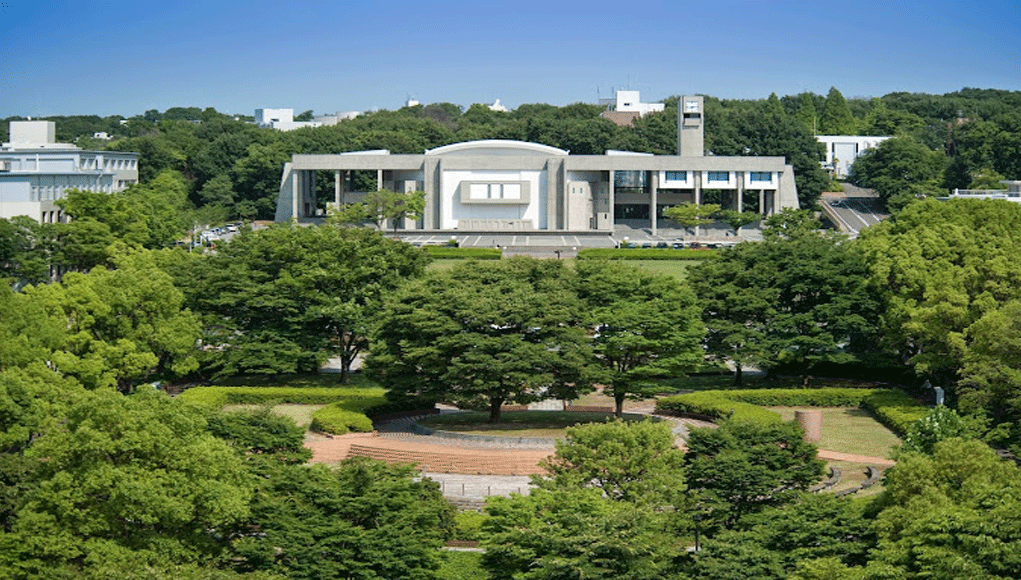
- The main hub is Higashiyama Campus, spanning approximately 532,200 m², donated by local landowners during the university’s establishment (kikin.nagoya-u.ac.jp).
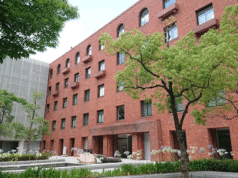
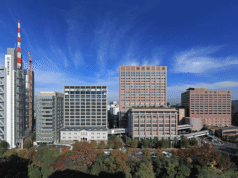
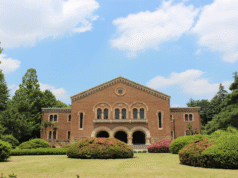
- Many modern research centers, libraries, faculty buildings, and agricultural research facilities bolster campus functionality (nupace.iee.nagoya-u.ac.jp, kikin.nagoya-u.ac.jp).
- Facilities include:
- Cafeterias and dining halls spread across campus (nupace.iee.nagoya-u.ac.jp).
- Sports complexes: gym, swimming pool, athletic fields.
- Numerous research institutes like the Materials Science Center, Disaster Mitigation Center, Synchrotron Radiation Center, and the Akasaki Research Center (named after Nobel laureate Isamu Akasaki) (nupace.iee.nagoya-u.ac.jp, Wikipedia).
- Career Support and Counseling Centers aiding students’ professional development (nupace.iee.nagoya-u.ac.jp).
5. Academic Excellence & Research Achievements
- The university has produced seven Nobel Laureates, ranking third in Japan and Asia behind Kyoto University and the University of Tokyo (Wikipedia).
- Achievements include milestones like the Sakata particle model, Okazaki fragments, Noyori asymmetric hydrogenation, and blue LED development (Wikipedia).
- GSID (Graduate School of International Development), founded in 1991, addresses global challenges through sustainable social science research and regional cooperation (Wikipedia).
6. Scholarships & Fellowship Opportunities
- The Nagoya University Foundation, established in 2006, manages donations for scholarships supporting student development (kikin.nagoya-u.ac.jp).
- International exchange students benefit from NUPACE, offering robust academic programs, language instruction, and cross-cultural offerings (nupace.iee.nagoya-u.ac.jp).
7. Career Support & Student Engagement
- The Career Support Center ensures guidance for internships, job placement, and counseling (nupace.iee.nagoya-u.ac.jp).
- The university-wide circle federation and athletic association encourage cultural and sports engagement:
- Meidai-sai festival, held annually since the 1960s, features labs tours, food stalls, and presentations (Wikipedia).
8. Notable Alumni & Global Reputation
- Highlights of distinguished alumni:
- The university advocates a distinct academic culture centered on freedom, openness, and enterprising spirit, fostering “courageous intellectuals” (en.nagoya-u.ac.jp).
9. Address & Contact Details
- Location: Higashiyama Campus, Chikusa-ku, Nagoya, Aichi, Japan—accessible via Nagoya Daigaku Station, opened in 2003 specifically for the university (Wikipedia).
- Additional campus and department-specific contact information is available through the official Nagoya University website.
Summary
Nagoya University—with over 150 years of history—has evolved from its beginnings as a medical school into a national research powerhouse. As a Designated National University, it combines multidisciplinary academic programs, Nobel-winning research, modern infrastructures, global engagement initiatives like NUPACE, and a rich student life. Guided by a philosophy of courage, openness, and innovation, Nagoya University continues to cultivate visionary leaders for an interconnected world.
Nagoya University Japan admission requirements, Nagoya University Japan scholarships for international students, Nagoya University research achievements, Nagoya University Japan global ranking 2025, Nagoya University Japan engineering programs, Nagoya University Japan graduate courses, Nagoya University campus facilities and services, how to apply to Nagoya University Japan