

The University of Osaka, Japan: From Tekijuku Roots to Global Research Leadership
Introduction
Tracing its intellectual lineage back to Tekijuku (1838)—a revered private school of Western medicine founded by Ogata Kōan—The University of Osaka officially emerged in 1931 as the sixth Imperial University of Japan. Rooted in Osaka’s vibrant spirit of civic scholarship, the institution has consistently embraced innovation, independence, and societal contribution. Over nearly two centuries, the university has grown into a multi-campus, research-intensive global leader offering a rich array of programs, world-class facilities, and unwavering support for students and researchers alike.
1. Establishment & Historical Evolution
- 1838 – Tekijuku Origins
Tekijuku, founded by Ogata Kōan, emphasized Western science and medicine, shaping a spirit later inherited by Osaka University (formerly known as Osaka Imperial University).
(Osaka University) - 1931 – Founding of Osaka Imperial University
Merging Osaka Prefectural Medical School and School of Science, the institution began with two schools: Medicine and Science.
(Osaka University) - 1933 – Creation of School of Engineering
Originating from Osaka Technical School, this addition expanded the university’s technical and industrial research capabilities.
(Osaka University) - 2007 – Merger with Osaka University of Foreign Studies
The integration brought in a prestigious School of Foreign Studies and enhanced international scholarship.
(Osaka University, Wikipedia) - Today
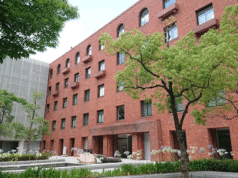
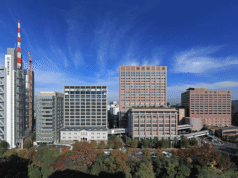
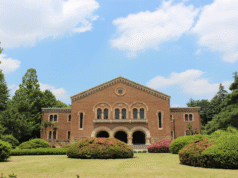
Now a comprehensive research university, Osaka has four campuses—Suita, Toyonaka, Minoh, and Nakanoshima—as well as 11 undergraduate schools, 15 graduate schools, and 23 research centers.
(Osaka University, Wikipedia)
2. Academic Structure & Courses Offered
- Undergraduate & Graduate Programs
Osaka University spans diverse disciplines, including Medicine, Sciences, Engineering, Humanities, Law, Foreign Studies, and Human Sciences.
(Wikipedia) - Global-Oriented Studies
Its unique inclusion of a School of Foreign Studies positions the university as a rare national institution with strong international engagement.
(Osaka University, Wikipedia) - Flexible Graduate Pathways
Prospective graduate students can apply via the Admissions Assistance Desk (AAD) to connect with potential supervisors and streamline the admission process.
(Osaka University)
3. Campus Network & Facilities
- Campuses
- Suita – main campus with extensive academic facilities
- Toyonaka – humanities and social sciences hub
- Minoh – housing the School of Foreign Studies
- Nakanoshima – historic city-center campus, now mostly relocated
(Wikipedia, Osaka University)
- Research Infrastructure
Centers like the Institute of Scientific and Industrial Research and the Research Institute for Microbial Diseases were developed with private support, expanding Osaka’s specialized research scope.
(Osaka University)
4. Academic Excellence & Research Initiatives
- Legacy of Innovation
The university’s advisory motto, “Do not imitate others. Do things your own way,” continues to guide its mission of pioneering research.
(Osaka University) - Advanced Research Facilities
A series of graduate schools and research centers reinforce Osaka’s comprehensive approach to scholarship in both sciences and liberal arts.
(Osaka University, Wikipedia)
5. Scholarships, Fellowships & Financial Aid
- MEXT Scholarships
Available via embassy or university recommendation for both undergraduate and graduate students. Support includes Japanese language training prior to degree studies.
(Osaka University) - Tuition Fee Exemption for International Honors Students
Provides full tuition exemption for graduate students with outstanding entrance exam performance (2025 tuition is 535,800 JPY).
(Osaka University) - CSC-OU Joint Scholarship
For Chinese students pursuing doctoral studies, this scholarship covers entrance and tuition fees in collaboration with the China Scholarship Council.
(Osaka University) - Graduate School of Humanities Support
- OU Humanities Outstanding International Student Award grants full tuition exemption and research support.
- Additional backing includes travel subsidies and JSPS fellowships.
(hmt.osaka-u.ac.jp)
- Monbukagakusho (MEXT) Honors Scholarship
Monthly stipend ranges for privates-funded students: 48,000 JPY undergrad, 65,000 JPY grad. Approximately 40% of international students receive some form of aid.
(Osaka University) - Faculty-Specific Grants
- The Graduate School of Frontier Biosciences offers Fellowships, TA/RA roles, and JSPS support.
(fbs.osaka-u.ac.jp) - The Faculty of Medicine, through donor-backed foundations like Fujii and Kishimoto, supports travel, scholarships, and research abroad.
(med.osaka-u.ac.jp)
- The Graduate School of Frontier Biosciences offers Fellowships, TA/RA roles, and JSPS support.
6. Career Development & Placement Support
- AAD System and Supervisory Connection
AAD assists international graduate students in securing faculty sponsors and easing application navigation.
(Osaka University) - Student Insights
Reddit users report that Osaka University’s reputation opens doors, especially among Japanese employers. Campus life is noted as friendly, with numerous clubs and social activities.
(Reddit)
7. Reputation & Distinguished Alumni
- Prestige & Impact
Holds a place among Japan’s most selective and respected universities; notable achievements in Nobel Prizes, advanced research, and international studies.
(Wikipedia) - Notable Scholars
Alumni include Nobel Laureates Hideki Yukawa (Physics, 1949) and Akira Yoshino (Chemistry, 2019), as well as innovators in immunology and robotics such as Shizuo Akira and Hiroshi Ishiguro.
(Wikipedia)
8. Address & Contact Details
While detailed departmental addresses and contacts were not explicitly listed in the available official pages, visitors should consult the university’s official “Access” and “Contact” portals for precise campus locations, administrative offices, and support services.
(Osaka University, Wikipedia)
Summary
The University of Osaka fuses a heritage of citizen-led scholarship since Tekijuku with modern academic breadth and innovation. From its establishment as the sixth Imperial University in 1931 to its expansive campuses in Suita, Toyonaka, Minoh, and Nakanoshima, OU has become a cornerstone of national and international research. It offers robust academic programs, diverse scholarship and aid structures, progressive research centers, and solid career pathways, all underpinned by a legacy of individuality and excellence. An institution that truly embodies “regional roots and global growth,” Osaka continues to shape thinkers, innovators, and leaders.
University of Osaka Japan courses and programs, Osaka University Japan admission process, scholarships at University of Osaka Japan, University of Osaka Japan campus facilities, Osaka Japan higher education opportunities, Osaka University Japan research achievements, career opportunities at Osaka University Japan, notable alumni of University of Osaka Japan